Why Your New Orleans Home Still Feels Dusty Even After You Change the Air Filter
Persistent dust in New Orleans homes isn’t just an inconvenience. It’s a symptom of the unique environmental challenges we face here. The combination of high humidity, historic construction, and local allergens creates a perfect storm for indoor air quality problems that simple filter changes cannot solve. Get Your New Orleans AC Running Again with Our 24-Hour Emergency Repair Service.
Living in the Big Easy means dealing with year-round humidity levels that often exceed 80%. This moisture doesn’t just make you uncomfortable. It transforms ordinary household dust into a sticky, stubborn substance that clings to every surface. When you add in the oak pollen that blankets our neighborhoods each spring and the fine silt that blows in from the Mississippi River, you have a constant battle against particulate matter that standard air filters were never designed to handle.
Let’s look at what’s really happening inside your home and why professional HVAC solutions are the only way to achieve lasting relief from the dust that seems to multiply overnight.
How New Orleans Humidity Makes Dust Problems Worse

Humidity is the hidden enemy in the dust battle. When relative humidity climbs above 60%, several things happen that make dust control nearly impossible through DIY methods alone.
Dust mites thrive in humid environments. These microscopic creatures feed on dead skin cells and multiply rapidly when moisture levels are high. A single gram of dust can contain hundreds of these allergens, and they release proteins that trigger respiratory issues and create that musty smell many New Orleans homes develop. Fighting New Orleans Humidity with a Professional Whole-Home Dehumidifier Installation.
The moisture also causes dust particles to clump together. Instead of light, easily filtered particles, you get heavy clusters that settle quickly on surfaces. These clumps are too large for standard filters to capture effectively and too heavy to stay suspended in the air where filtration could work.
High humidity also promotes mold growth in ductwork and on evaporator coils. When mold spores mix with dust, you get a composite particle that’s both sticky and potentially harmful to your health. This is why homes in Lakeview, Gentilly, and other flood-prone areas often experience worse dust problems than homes in higher elevations. Why Your Lakeview Home Needs a High-Efficiency AC Unit to Combat Swampy Humidity.
The Hidden Culprit: Leaky Return Ducts Pulling in Attic Dust
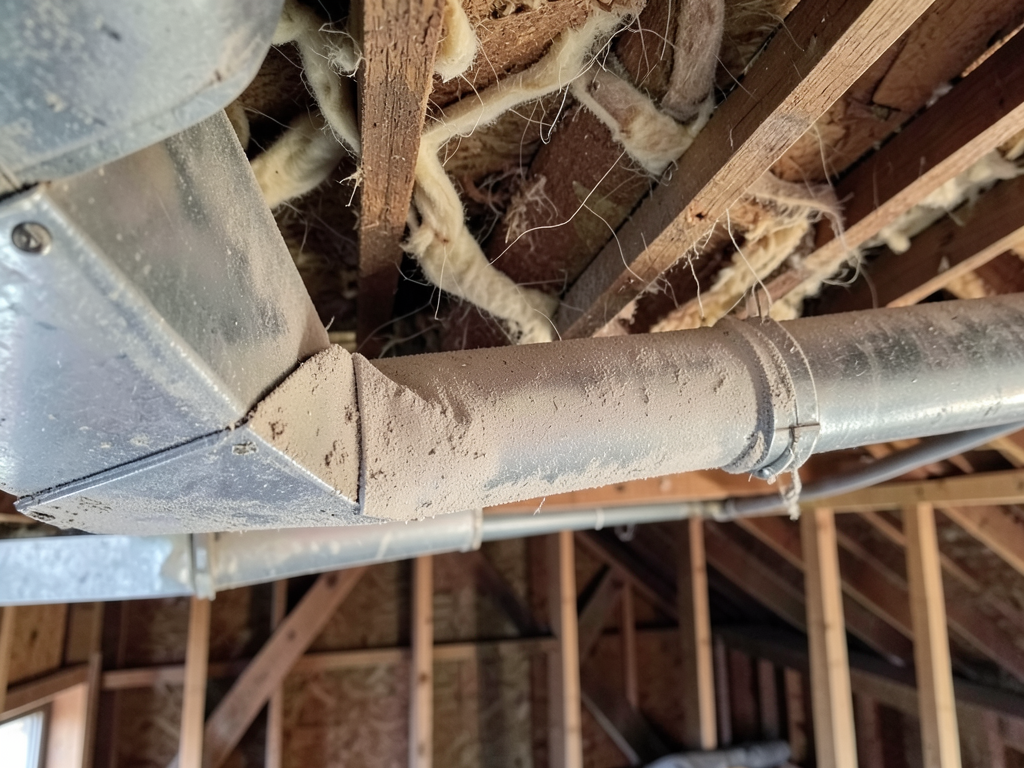
Here’s a diagnostic test you can try: hold a tissue near your return air vent while the system is running. If it gets pulled toward the vent, your system is creating negative pressure. While some negative pressure is normal, excessive pressure indicates duct leaks that are drawing contaminated air from your attic or crawl space.
Many New Orleans homes, especially those built before 2000, have ductwork that’s been compromised by years of humidity, pest intrusion, and settling foundations. These leaks can pull in insulation fibers, termite droppings, rodent dander, and the fine dust that accumulates in attic spaces. The problem is particularly severe in raised pier-and-beam homes common in Mid-City and Uptown, where ductwork runs beneath the living space. Emergency Ductwork Repair.
According to the Department of Energy, the average home loses 20-30% of its conditioned air through duct leaks. In our humid climate, those leaks also pull in an equivalent volume of unfiltered, contaminated air. This means your HVAC system is constantly introducing new dust while trying to clean the air. Department of Energy duct sealing information.
The solution isn’t just sealing visible gaps. Professional duct testing using blower door technology can identify leaks throughout the system, including those hidden behind walls or under floors. Aeroseal technology can then seal these leaks from the inside, creating an airtight system that only pulls air through your intended filtration system.
Why Standard Filters Fail in New Orleans’ Unique Environment
Not all air filters are created equal, and New Orleans’ specific challenges require specific solutions. Understanding MERV ratings (Minimum Efficiency Reporting Value) is crucial for effective dust control.
| MERV Rating | Particle Size Captured | Best For New Orleans Homes | Airflow Impact |
|---|---|---|---|
| MERV 6-8 | Pollen, dust mites, sanding dust | Basic protection, but insufficient for our climate | Minimal |
| MERV 11 | Mold spores, pet dander, pudding mix | Good balance for most homes | Low |
| MERV 13 | Legionella, lead dust, auto emissions | Excellent for allergy sufferers | Moderate |
| MERV 16 | Bacteria, tobacco smoke, insecticide dust | Overkill for residential use | High |
The problem with simply installing a higher MERV filter is that your system may not be designed to handle the increased resistance. When filters are too dense for the blower motor, airflow decreases, which reduces overall system efficiency and can actually make dust problems worse by allowing more particles to settle before they reach the filter.
Professional HVAC technicians can test your system’s static pressure and recommend the optimal MERV rating that balances filtration efficiency with proper airflow. In many cases, this means installing a MERV 11 or 13 filter along with system modifications to ensure adequate air movement.
Whole-Home Air Purification vs. UV Light Systems
When basic filtration isn’t enough, whole-home air purification systems offer a significant upgrade. These systems work by creating multiple barriers against airborne contaminants.
Electronic air cleaners use charged plates to attract and capture particles as small as 0.3 microns. This includes most bacteria, smoke particles, and the fine dust that standard filters miss. The captured particles stick to collector plates that can be removed and cleaned, making these systems both effective and economical over time.
UV light systems take a different approach by neutralizing biological contaminants. The ultraviolet light damages the DNA of mold spores, bacteria, and viruses, preventing them from reproducing. When installed near the evaporator coil, UV lights also prevent the biofilm buildup that can reduce cooling efficiency and contribute to that musty odor common in humid climates.
The most effective solution often combines both technologies. A high-quality electronic air cleaner captures the physical particles while UV lights handle the biological contaminants. This dual approach addresses both the dust you can see and the microscopic particles that affect your health.
The Role of Humidity Control in Dust Management
Whole-home dehumidification is often the missing piece in the dust control puzzle. While your air conditioner does remove some moisture from the air, it’s not designed to maintain optimal humidity levels throughout the year.
Ideal indoor humidity for dust control falls between 40-50%. At this level, dust mites cannot survive, mold growth is inhibited, and airborne particles remain light enough to be captured by filtration systems. However, New Orleans’ outdoor humidity frequently exceeds 90%, making it nearly impossible to achieve these levels without dedicated equipment.
Whole-home dehumidifiers integrate with your existing HVAC system to remove excess moisture before it enters your living spaces. These units can extract 70-100 pints of water per day from the air, maintaining consistent humidity levels regardless of outdoor conditions.
The benefits extend beyond dust control. Proper humidity levels reduce the workload on your air conditioner, extend the life of wooden furniture and musical instruments, and eliminate the sticky feeling that makes summer nights uncomfortable. Many homeowners report that whole-home dehumidification is the single most effective upgrade for improving indoor air quality.
Professional IAQ Audits: What to Expect
When DIY solutions fail, a professional Indoor Air Quality audit can identify the specific factors contributing to your dust problems. These comprehensive evaluations go far beyond simple filter recommendations.
The audit process typically includes air quality testing to measure particulate levels, humidity monitoring to identify moisture problems, and duct leakage testing to find hidden sources of contamination. Technicians use specialized equipment like particle counters, moisture meters, and thermal imaging cameras to create a complete picture of your home’s air quality challenges.
One critical test is the blower door test, which measures how much air leaks in and out of your home. In New Orleans, many historic homes have significant air infiltration through old windows, doors, and construction gaps. This uncontrolled air exchange brings in outdoor pollutants, pollen, and dust continuously, overwhelming even the best filtration systems.
The audit also examines your HVAC system’s design and installation. Many homes in our area have systems that were improperly sized or installed without adequate return air capacity. These design flaws create pressure imbalances that draw contaminated air from unwanted areas into your living spaces.
DIY Maintenance vs. When to Call a Professional
Some dust control measures are within every homeowner’s capability, but knowing when to call a professional can save you time, money, and frustration.
Effective DIY maintenance includes changing filters every 30-60 days (more frequently during high pollen seasons), keeping supply and return vents unobstructed, and using HEPA-filter vacuum cleaners that capture particles as small as 0.3 microns. Regular dusting with microfiber cloths that trap rather than scatter particles also helps. EPA Indoor Air Quality guidelines.
However, certain situations require professional intervention. If you notice dust accumulating within days of cleaning, if family members experience increased allergy symptoms, or if you see visible dust coming from supply vents, these are signs of systemic problems that DIY methods cannot solve.
Other red flags include inconsistent temperatures between rooms (indicating duct problems), musty odors when the system runs (suggesting mold in ductwork), and excessive static electricity (a sign of very dry air that can actually increase dust problems). These symptoms often indicate issues that require specialized diagnostic equipment and professional solutions.
The New Orleans Factor: Local Allergens and Construction Challenges
New Orleans presents unique challenges that out-of-state HVAC companies simply don’t understand. Our local environment creates specific problems that require local solutions.
Oak pollen, which blankets the city each spring, is particularly problematic because the particles are small enough to pass through standard filters yet large enough to trigger allergies. Cypress pollen from our swamps adds another seasonal challenge. Even our famous live oaks contribute, as their fine, powdery pollen can infiltrate homes through the smallest gaps.
Historic construction methods also play a role. Many Garden District and French Quarter homes were built with lath and plaster walls that develop fine cracks over time. These cracks allow dust from wall cavities to enter living spaces. The termite damage common in our area creates additional pathways for dust infiltration.
Even our famous architecture affects air quality. Shotgun houses, with their long, narrow layouts, often have HVAC systems that struggle to provide adequate airflow to all rooms. This creates pressure imbalances that draw dust from one area into another, spreading contamination throughout the home.
Investment Considerations: Cost vs. Long-Term Benefits
Professional IAQ solutions represent an investment in your home’s health and your family’s comfort. While the upfront costs may seem significant, the long-term benefits often justify the expense.
Basic duct sealing typically costs $500-1,500 depending on your home’s size and the extent of leaks. Whole-home air purification systems range from $800-2,500 installed. Whole-home dehumidifiers cost $1,500-3,000, including installation.
These investments often pay for themselves through reduced energy bills (sealed ducts can improve efficiency by 20-30%), extended HVAC equipment life (clean systems experience less wear), and reduced medical expenses (fewer allergy medications and doctor visits for respiratory issues).
Many homeowners find that professional IAQ solutions also increase their home’s value. Buyers in our market increasingly recognize the importance of good indoor air quality, especially those with children or elderly family members who are more vulnerable to air quality issues.
Taking Action: Your Path to a Dust-Free Home
The journey to better indoor air quality starts with understanding that dust problems in New Orleans homes are complex and often require multiple solutions working together. Simple filter changes, while important, address only one aspect of a multifaceted problem.
Begin with a professional IAQ assessment to identify the specific factors affecting your home. This targeted approach ensures you invest in solutions that address your actual problems rather than wasting money on generic fixes that may not work for your situation.
Consider your home’s unique characteristics. Historic homes may need specialized sealing techniques that preserve architectural integrity. Homes near water may require additional moisture control. Allergy sufferers might benefit from hospital-grade filtration systems.
Remember that effective dust control is an ongoing process, not a one-time fix. Regular maintenance, seasonal filter changes, and periodic system inspections ensure your solutions continue working effectively year after year.
Ready to breathe easier in your New Orleans home? Call (504) 355-2955 today to schedule your comprehensive IAQ audit. Our local experts understand the unique challenges of our climate and can recommend solutions that actually work for New Orleans homes. Don’t let another day of dust accumulation affect your family’s health and comfort. Pick up the phone and call (504) 355-2955 now to take the first step toward cleaner, healthier air in your home. Expert Furnace Repair in Gretna to Keep Your Family Warm on Chilly Delta Nights.
Frequently Asked Questions
How often should I change my air filter in New Orleans’ humid climate?
In New Orleans’ humid environment, change standard 1-inch filters every 30 days during peak cooling season (May through October). Use higher MERV filters? Check them every 2-3 weeks as they capture more particles and may need more frequent replacement. Homes with pets or allergy sufferers should change filters even more often.
Can duct cleaning really reduce household dust?
Yes, but only if done properly by certified professionals using negative air pressure systems. Surface-level cleaning provides minimal benefit. Professional duct cleaning removes accumulated dust, debris, and microbial growth from your entire duct system, which can significantly reduce the dust circulating through your home. However, if duct leaks aren’t sealed afterward, new contamination will quickly enter the system.
Are whole-home air purifiers worth the investment for New Orleans homes?
For most New Orleans homes, yes. Our combination of high humidity, local allergens, and historic construction creates air quality challenges that portable units cannot adequately address. Whole-home systems provide continuous filtration for your entire living space, handle higher volumes of air, and integrate seamlessly with your existing HVAC system for optimal performance.
What’s causing the white dust on my furniture that appears within days of cleaning?
This is likely a combination of factors common in our area: mineral dust from our water supply, fine silt from the Mississippi River valley, and biological particles that thrive in our humidity. If it’s accumulating rapidly, you probably have duct leaks pulling in unfiltered air or insufficient filtration for your home’s specific conditions.
How do I know if my HVAC system is properly sized for my home?
Signs of improper sizing include inconsistent temperatures between rooms, short cycling (system turning on and off frequently), and excessive humidity even when the system runs continuously. A professional load calculation considers your home’s square footage, insulation levels, window orientation, and local climate factors to determine the optimal system size.
{
“@context”: “https://schema.org”,
“@type”: “BlogPosting”,
“headline”: “Why Your New Orleans Home Still Feels Dusty Even After You Change the Air Filter”,
“description”: “Struggling with persistent dust in your New Orleans home? Discover how humidity, duct leaks, and local allergens create unique IAQ challenges only a local HVAC expert can solve.”,
“wordCount”: 2455,
“datePublished”: “2026-03-31T07:56:00.000Z”,
“dateModified”: “2026-03-31T07:56:00.000Z”,
“inLanguage”: “en-US”,
“mainEntityOfPage”: {
“@type”: “WebPage”,
“@id”: “https://pioneerhvacneworleans.com”
},
“publisher”: {
“@type”: “LocalBusiness”,
“name”: “Pioneer HVAC New Orleans”,
“url”: “https://pioneerhvacneworleans.com”
},
“author”: {
“@type”: “Organization”,
“name”: “Pioneer HVAC New Orleans”,
“url”: “https://pioneerhvacneworleans.com”
},
“image”: {
“@type”: “ImageObject”,
“url”: “https://pioneerhvacneworleans.com/wp-content/uploads/2026/03/why-your-new-orleans-home-still-feels-dusty-even-a-1.png”
}
}
{
“@context”: “https://schema.org”,
“@type”: “HVACBusiness”,
“name”: “Pioneer HVAC New Orleans”,
“url”: “https://pioneerhvacneworleans.com”,
“address”: {
“@type”: “PostalAddress”,
“addressLocality”: “New Orleans”
},
“areaServed”: {
“@type”: “City”,
“name”: “New Orleans”
}
}
{
“@context”: “https://schema.org”,
“@type”: “FAQPage”,
“mainEntity”: [
{
“@type”: “Question”,
“name”: “How often should I change my air filter in New Orleans’ humid climate?”,
“acceptedAnswer”: {
“@type”: “Answer”,
“text”: “In New Orleans’ humid environment, change standard 1-inch filters every 30 days during peak cooling season (May through October). Use higher MERV filters? Check them every 2-3 weeks as they capture more particles and may need more frequent replacement. Homes with pets or allergy sufferers should change filters even more often.”
}
},
{
“@type”: “Question”,
“name”: “Can duct cleaning really reduce household dust?”,
“acceptedAnswer”: {
“@type”: “Answer”,
“text”: “Yes, but only if done properly by certified professionals using negative air pressure systems. Surface-level cleaning provides minimal benefit. Professional duct cleaning removes accumulated dust, debris, and microbial growth from your entire duct system, which can significantly reduce the dust circulating through your home. However, if duct leaks aren’t sealed afterward, new contamination will quickly enter the system.”
}
},
{
“@type”: “Question”,
“name”: “Are whole-home air purifiers worth the investment for New Orleans homes?”,
“acceptedAnswer”: {
“@type”: “Answer”,
“text”: “For most New Orleans homes, yes. Our combination of high humidity, local allergens, and historic construction creates air quality challenges that portable units cannot adequately address. Whole-home systems provide continuous filtration for your entire living space, handle higher volumes of air, and integrate seamlessly with your existing HVAC system for optimal performance.”
}
},
{
“@type”: “Question”,
“name”: “What’s causing the white dust on my furniture that appears within days of cleaning?”,
“acceptedAnswer”: {
“@type”: “Answer”,
“text”: “This is likely a combination of factors common in our area: mineral dust from our water supply, fine silt from the Mississippi River valley, and biological particles that thrive in our humidity. If it’s accumulating rapidly, you probably have duct leaks pulling in unfiltered air or insufficient filtration for your home’s specific conditions.”
}
},
{
“@type”: “Question”,
“name”: “How do I know if my HVAC system is properly sized for my home?”,
“acceptedAnswer”: {
“@type”: “Answer”,
“text”: “Signs of improper sizing include inconsistent temperatures between rooms, short cycling (system turning on and off frequently), and excessive humidity even when the system runs continuously. A professional load calculation considers your home’s square footage, insulation levels, window orientation, and local climate factors to determine the optimal system size.”
}
}
]
}
{
“@context”: “https://schema.org”,
“@type”: “BreadcrumbList”,
“itemListElement”: [
{
“@type”: “ListItem”,
“position”: 1,
“name”: “Home”,
“item”: “https://pioneerhvacneworleans.com”
},
{
“@type”: “ListItem”,
“position”: 2,
“name”: “Blog”,
“item”: “https://pioneerhvacneworleans.com/blog”
},
{
“@type”: “ListItem”,
“position”: 3,
“name”: “Why Your New Orleans Home Still Feels Dusty Even After You Change the Air Filter”
}
]
}
{
“@context”: “https://schema.org”,
“@type”: “Service”,
“serviceType”: “HVAC”,
“provider”: {
“@type”: “LocalBusiness”,
“name”: “Pioneer HVAC New Orleans”,
“url”: “https://pioneerhvacneworleans.com”
},
“areaServed”: {
“@type”: “City”,
“name”: “New Orleans”
},
“description”: “Struggling with persistent dust in your New Orleans home? Discover how humidity, duct leaks, and local allergens create unique IAQ challenges only a local HVAC expert can solve.”
}