




menu

SEER Ratings Explained in New Orleans – Make Smarter Cooling Choices That Cut Your Energy Bills

Understanding seasonal energy efficiency ratios helps New Orleans homeowners choose air conditioning systems that handle extreme humidity and heat while reducing monthly costs and improving home comfort year-round.

Slider Image 1
Slider Image 2
Slider Image 3
Slider Image 4
Slider Image 5
Slider Image 7
Slider Image 8
Slider Image 9
Slider Image 10
Slider Image 11

Why SEER Ratings Matter More in New Orleans Than Anywhere Else

New Orleans forces your air conditioner to work harder than almost anywhere in America. The subtropical climate delivers relentless humidity from April through October, with heat index values regularly pushing past 105 degrees. Your cooling system runs nearly eight months a year, turning energy efficiency from a nice feature into a financial necessity.

What is SEER rating? The seasonal energy efficiency ratio meaning measures how much cooling your system delivers per watt of electricity consumed during a typical cooling season. A higher SEER rating definition translates directly to lower operating costs when your AC runs 3,000-plus hours annually.

Understanding SEER ratings becomes critical when you factor in New Orleans's unique challenges. The moisture-saturated air near Lake Pontchartrain and along the Mississippi River corridor forces AC systems to work overtime removing humidity while maintaining temperature. A 14 SEER unit might seem adequate in Phoenix's dry heat, but the meaning of SEER in HVAC takes on added significance here where latent heat removal drives up energy consumption.

Systems rated below 14 SEER waste electricity fighting New Orleans humidity. You pay the difference every month. Mid-City residents with older 10 SEER units often see summer bills exceeding $300, while comparable homes with 16 SEER systems run $180-$200 under identical conditions.

The 2023 federal minimum SEER requirement jumped to 14 for northern states and 15 for southern regions including Louisiana. This change reflects what local HVAC professionals already knew: inefficient cooling costs more in places where AC systems never get a break.

Why SEER Ratings Matter More in New Orleans Than Anywhere Else
How SEER Ratings Actually Work in Real-World New Orleans Conditions

How SEER Ratings Actually Work in Real-World New Orleans Conditions

The seasonal energy efficiency ratio measures BTUs of heat removed divided by watt-hours of electricity consumed. A 16 SEER system removes 16 BTUs per watt-hour under laboratory conditions. Real-world performance varies based on installation quality, ductwork efficiency, and local climate factors.

New Orleans conditions push systems harder than the standardized test environment assumes. The SEER calculation uses a temperature range of 65-104 degrees, but your system faces sustained 95-degree days with 80 percent relative humidity. The latent cooling load from moisture removal adds 20-30 percent more work than the sensible cooling load from temperature reduction alone.

Proper sizing matters more than raw SEER numbers. An oversized 18 SEER system that short-cycles will perform worse than a correctly sized 16 SEER unit that runs complete cycles. Short-cycling prevents adequate dehumidification, leaving your Bywater shotgun house feeling clammy even when the thermostat reads 72 degrees.

Ductwork efficiency directly impacts realized SEER performance. Leaky ducts in your attic waste 25-40 percent of conditioned air before it reaches living spaces. A 16 SEER system with compromised ductwork delivers effective performance closer to 11-12 SEER. Pioneer HVAC New Orleans always performs blower door tests and duct leakage assessments before recommending equipment upgrades.

Variable-speed compressors and multi-stage systems achieve higher SEER ratings by modulating output to match actual cooling demand. Instead of running full-blast until the thermostat clicks off, these systems run longer cycles at lower speeds. This approach removes more moisture and maintains tighter temperature control in New Orleans's challenging climate.

How We Help You Choose the Right SEER Rating

SEER Ratings Explained in New Orleans – Make Smarter Cooling Choices That Cut Your Energy Bills
01

Load Calculation Analysis

We perform Manual J load calculations specific to your home's square footage, insulation levels, window orientation, and occupancy patterns. This engineering-based assessment determines your actual cooling requirements in BTUs per hour. Generic rules like 400 square feet per ton fail in New Orleans because they ignore humidity loads and construction variables. Proper sizing ensures your chosen SEER rating delivers its promised efficiency rather than theoretical lab numbers.
02

Cost-Benefit Comparison

We calculate your payback period comparing 14, 16, 18, and 20 SEER options against your current usage patterns and local electricity rates. Entergy New Orleans rates average 12 cents per kilowatt-hour, making higher SEER investments pay back faster than in cheaper electricity markets. We show you exactly how many months each efficiency tier takes to recover its upfront cost premium through reduced operating expenses based on your specific cooling load.
03

Installation Quality Verification

We verify refrigerant charge using superheat and subcooling measurements, confirm proper airflow across the evaporator coil at 400 cubic feet per minute per ton, and test duct system integrity. These installation factors determine whether your 16 SEER system actually performs at 16 SEER or degrades to 12 SEER due to field errors. We provide documented commissioning reports showing your system meets manufacturer specifications and delivers its rated efficiency.

Why New Orleans Homeowners Trust Our SEER Guidance

Understanding SEER ratings requires local context that national retailers and big-box stores cannot provide. A system perfect for Albuquerque fails in New Orleans humidity. We evaluate equipment performance based on thousands of local installations across Garden District raised homes, Lakeview slab foundations, and French Quarter historic buildings with unique architectural constraints.

New Orleans building codes require 15 SEER minimum for new installations and replacements. The city adopted this standard ahead of federal requirements because local officials recognized the energy burden inefficient cooling places on residents. We stay current on these evolving requirements and help you navigate available tax credits and utility rebates that offset higher-efficiency equipment costs.

Entergy New Orleans offers rebates up to $500 for systems rated 16 SEER or higher. These incentives change quarterly. Pioneer HVAC New Orleans tracks current programs and handles rebate paperwork as part of our installation service, ensuring you capture every available dollar.

Historic district installations require special consideration. The Vieux Carré Commission and other preservation boards regulate exterior equipment placement and appearance. We design systems that meet modern efficiency standards while respecting architectural guidelines. Our team knows which condensing unit locations satisfy both SEER performance requirements and historic preservation rules.

Humidity control matters more than raw cooling capacity in this climate. We prioritize systems with enhanced dehumidification capability even if they carry slightly lower SEER ratings than units optimized purely for sensible cooling. A 16 SEER system with superior moisture removal delivers better comfort than an 18 SEER unit that leaves your home feeling damp.

What to Expect When Upgrading to Higher SEER Equipment

Installation Timeline

Complete system replacement takes one to two days depending on ductwork modifications and electrical service upgrades. We schedule installations during mild weather when possible to minimize discomfort. Emergency replacements during heat waves get priority response within 24 hours. Our crews arrive with all necessary equipment, permits, and materials to complete the job in a single mobilization. We never leave you without cooling overnight. Temporary portable units bridge the gap if unexpected complications extend the timeline.

Home Assessment Process

Initial consultations take 60-90 minutes and include attic inspection, ductwork examination, electrical panel evaluation, and thermostat placement assessment. We measure supply register airflow, check return air pathways, and identify any building envelope issues that compromise efficiency. You receive a written report explaining your current system performance, recommended SEER rating based on your specific situation, and total project cost broken down by equipment and labor. We never pressure you toward unnecessary upgrades. If your existing system suits your needs, we tell you.

Performance Results

Properly installed high-SEER systems deliver noticeable improvements in comfort and operating cost within the first billing cycle. You will feel more consistent temperatures throughout your home, reduced humidity levels, and quieter operation. Variable-speed systems run longer cycles at lower fan speeds, eliminating the blast-of-cold-air feeling older single-stage units produce. Most New Orleans homeowners upgrading from 10 SEER to 16 SEER equipment see 30-40 percent reductions in cooling costs. The investment typically pays for itself in five to eight years through energy savings alone.

Maintenance Requirements

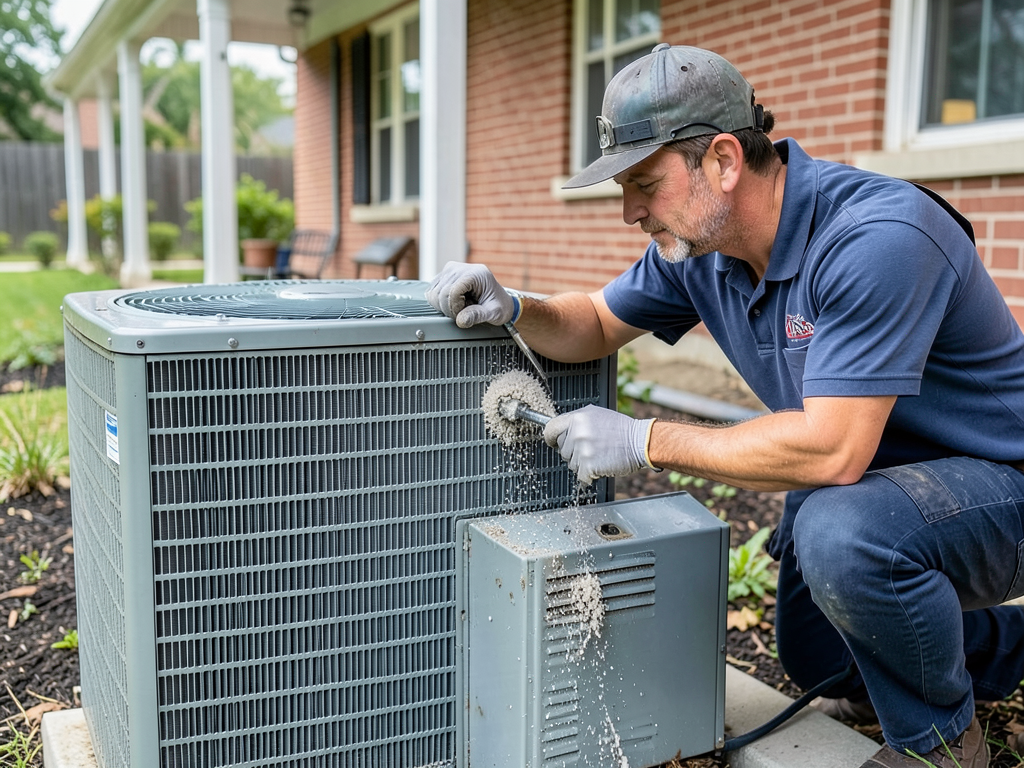
Higher-SEER systems require consistent maintenance to preserve rated efficiency. We recommend biannual service visits scheduled in March and October. These tune-ups include filter replacement, coil cleaning, refrigerant level verification, and electrical connection inspection. New Orleans air carries salt spray near the lakefront and river, accelerating coil corrosion. Regular cleaning prevents efficiency degradation. Most manufacturers require documented annual maintenance to maintain warranty coverage. We offer service agreements that handle scheduling automatically and provide priority response if problems develop between visits.

Frequently Asked Questions

You Have Questions,
We Have Answers

What is the $5000 rule for HVAC? +

The $5000 rule is a quick repair-versus-replace calculation. Multiply the age of your system by the repair cost. If the total exceeds $5000, replacement often makes more financial sense than fixing. For example, if your unit is 12 years old and the repair costs $500, that equals $6000. Time to replace. In New Orleans, where high humidity and heavy use shorten equipment lifespan, units over 10 years old with expensive repairs rarely justify the investment. Your energy bills, comfort, and warranty coverage improve significantly with a new system designed for our subtropical climate.

How much more efficient is a 20 SEER vs 18 SEER? +

A 20 SEER unit operates about 11 percent more efficiently than an 18 SEER model. That difference translates to lower monthly energy costs, but the upfront price gap matters. In New Orleans, where air conditioners run nearly year-round due to our heat and humidity, the efficiency gain adds up over time. Your actual savings depend on usage patterns, home insulation, and local electricity rates. For homes with poor insulation or leaky ductwork, fixing those issues first delivers better returns than chasing the highest SEER rating available.

What is the minimum SEER for tax credit 2025? +

The 2025 federal tax credit requires a minimum SEER2 rating of 16 for central air conditioners. This updated metric replaces the older SEER standard and reflects more realistic testing conditions. Systems meeting this threshold may qualify for up to 30 percent of the cost, capped at $1200. In New Orleans, where cooling demand stays high most of the year, choosing equipment that meets this threshold reduces both your tax liability and long-term operating costs. Verify eligibility with your tax professional and confirm your system carries proper certification.

Is it worth upgrading from 14 SEER to 16 SEER? +

Upgrading from 14 SEER to 16 SEER improves efficiency by roughly 14 percent. In New Orleans, where cooling costs dominate energy bills nine months yearly, that difference becomes meaningful over time. The payback period depends on your current system's age, repair history, and energy rates. If your 14 SEER unit still runs reliably, wait until replacement is necessary. If it requires frequent repairs or struggles with our humidity, upgrading now makes sense. The new system also qualifies for federal tax credits and provides better dehumidification for our climate.

What is the 3 minute rule for AC? +

The 3 minute rule prevents compressor damage by allowing refrigerant pressures to equalize between cycles. After your air conditioner shuts off, wait at least three minutes before restarting. Immediate restarts force the compressor to work against high pressure, stressing internal components and shortening equipment life. Most modern thermostats include built-in time delays to enforce this protection automatically. In New Orleans, where frequent afternoon thunderstorms cause power flickers, this safeguard becomes critical. If your system short cycles or trips breakers, call a technician to diagnose the underlying problem.

Is it better to oversize or undersize an AC unit? +

Neither oversizing nor undersizing works well. An oversized unit cools too quickly without running long enough to remove humidity, leaving your home clammy and uncomfortable in New Orleans conditions. Short cycling also wastes energy and stresses components. An undersized unit runs constantly, struggles to reach setpoint on hot days, and wears out faster. Proper sizing requires a Manual J load calculation that accounts for your home's insulation, window quality, orientation, and occupancy. Contractors who size equipment by square footage alone cut corners and cost you comfort and money.

How many sq ft will a 3 ton AC cool? +

A 3 ton air conditioner typically handles 1500 to 1800 square feet, but square footage alone does not determine proper sizing. Your home's insulation quality, ceiling height, window efficiency, sun exposure, and occupancy all affect cooling load. In New Orleans, where single-wall construction and large windows prevail in older homes, a 3 ton unit may only cool 1200 square feet effectively. Homes with modern insulation and energy-efficient windows stretch that capacity further. Always demand a Manual J load calculation before accepting any contractor's recommendation.

What is the best SEER rating for the money? +

The best SEER rating balances upfront cost with long-term savings based on your usage patterns. In New Orleans, where air conditioners run heavily for extended seasons, 16 to 18 SEER offers the strongest return on investment for most homeowners. Higher ratings deliver diminishing returns unless you plan to stay long-term or have poor insulation. Units below 15 SEER waste money monthly through higher energy bills. Focus first on proper sizing and installation quality, then choose the highest SEER your budget allows within that practical range.

How cool should my house be if it's 100 outside? +

Your air conditioner should maintain indoor temperatures 15 to 20 degrees below outdoor conditions at peak performance. If it reaches 100 degrees outside, expect your home to stay between 80 and 85 degrees, not 70. Systems struggle during extreme heat, and pushing your thermostat lower wastes energy without improving comfort. In New Orleans, where heat index often exceeds 100 degrees, realistic expectations matter. If your home climbs above 85 degrees on hot days, check for insufficient insulation, ductwork leaks, or undersized equipment before assuming equipment failure.

Can you write off a new HVAC on your taxes? +

You can claim a federal tax credit for qualified HVAC equipment that meets energy efficiency standards. The 2025 credit covers 30 percent of costs up to $1200 for central air conditioners, $2000 for heat pumps. Your system must meet minimum SEER2 requirements and carry proper certification. This credit applies to equipment costs only, not labor. Deductions differ from credits and depend on whether you use your home for business purposes. Consult your tax professional to confirm eligibility and maximize benefits based on your specific situation.

How New Orleans Humidity and Heat Make SEER Ratings Critical

New Orleans ranks among the top five most humid major cities in America, with average relative humidity staying above 75 percent year-round. This moisture-saturated air forces air conditioning systems to remove water vapor continuously while maintaining temperature setpoints. The latent cooling load from dehumidification often exceeds the sensible cooling load from temperature reduction. Systems with insufficient SEER ratings lack the capacity to handle both jobs efficiently. You end up with either high energy bills or uncomfortable indoor conditions. The meaning of SEER in HVAC takes on added importance here because inefficient systems cannot keep pace with moisture intrusion without consuming excessive electricity.

Local building officials adopted the 15 SEER minimum requirement because they understood New Orleans climate demands more from cooling equipment than temperate regions require. Contractors familiar with national standards but unfamiliar with local conditions often undersize dehumidification capacity or recommend equipment optimized for dry climates. Pioneer HVAC New Orleans specializes in matching system specifications to the unique challenges of subtropical coastal environments. We understand how proximity to Lake Pontchartrain affects indoor humidity, how raised foundation homes lose conditioned air differently than slab construction, and how historic building materials respond to aggressive dehumidification. This local expertise ensures your SEER rating choice delivers real-world performance rather than disappointing laboratory promises.

HVAC Services in The New Orleans Area

Pioneer HVAC New Orleans is proud to serve the entire New Orleans metropolitan area and surrounding parishes. Our central location allows our technicians to rapidly reach you, minimizing your wait time and ensuring quick service response for your heating and cooling needs. Invite us to your location by checking our service area map online or simply giving us a call today to confirm service availability at your specific address.

Address:
Pioneer HVAC New Orleans, 612 Andrew Higgins Dr, New Orleans, LA, 70130

Additional Services We Offer

Our news updates

Latest Articles & News from The Blogs

HVAC Red Flags to Look for Before Buying a Home in Belle Chasse \n\n Buying a home in Belle Chasse…

HVAC Red Flags to Look for Before Buying a Home in Belle Chasse

HVAC Red Flags to Look for Before Buying a Home in Belle Chasse \n\n Buying a home in Belle Chasse…

Why Your New Orleans Home is Settling and Pulling Your Ductwork Apart

Why Your New Orleans Home is Settling and Pulling Your Ductwork Apart New Orleans homes face a unique challenge that…

Cleaning Your AC System After a Major Home Renovation in Arabi

Cleaning Your AC System After a Major Home Renovation in Arabi \n\n Construction dust sawdust and drywall debris can infiltrate…

Contact Us

Stop guessing about air conditioning efficiency. Call Pioneer HVAC New Orleans at (504) 355-2955 for a detailed home assessment and customized SEER rating recommendation. We provide transparent cost comparisons and help you maximize available rebates while choosing equipment that actually performs in this climate.