Why Water is Dripping from Your Ceiling (The Hidden Danger of Clogged Drain Lines)
When you see water dripping from your ceiling, your first thought might be a roof leak. But in New Orleans, the culprit is often hiding in your attic. A clogged AC condensate drain line can cause water to back up and overflow, creating the exact dripping ceiling you’re seeing right now. Get Your New Orleans AC Running Again with Our 24-Hour Emergency Repair Service.
Here’s the problem. Your air conditioner removes moisture from the air as it cools. In our 90%+ humidity, that’s a lot of water. When the drain line gets blocked by algae, dirt, or debris, water backs up into the drain pan. If the pan is old or rusted, it leaks. If the water rises high enough, it triggers your float switch to shut off the AC, but not before damage occurs.
Before you call a roofer, check your HVAC system. The signs are specific. You’ll see water spots on your ceiling near air vents. You might smell musty odors from mold growing in the drain pan. Your AC might shut off unexpectedly or run inefficiently. These are all symptoms of a clogged condensate line, not a roof problem.
The good news is you can often clear a minor clog yourself. The bad news is waiting too long can lead to thousands in water damage, mold remediation, and ceiling repairs. In New Orleans’ climate, where humidity accelerates algae growth, this isn’t a problem that fixes itself. EPA mold information.
Signs Your AC Drain Line is Clogged (Water in Pan, Musty Smells)
Water dripping from your ceiling is the most obvious sign, but there are earlier warnings. Your AC drain pan fills with water instead of draining properly. You notice musty or moldy smells coming from your vents or attic. Your system shuts off randomly, especially on hot days when it’s working hardest.
Listen for gurgling sounds from your drain line. That’s air bubbling through water that can’t drain properly. Check your secondary drain pan if you have one. If it has water in it, your primary drain is already backing up. Some systems have a float switch that automatically shuts off the AC when water rises too high. If your AC won’t turn on during hot weather, check this switch.
Water spots on your ceiling near vents are a clear indicator. These spots often start small and grow larger over days or weeks. The water is dirty, so the spots may have a brownish tint. If you press on the ceiling and it feels soft or spongy, you have active water damage that needs immediate attention. Why Your Lakeview Home Needs a High-Efficiency AC Unit to Combat Swampy Humidity.
Why NOLA Humidity Leads to Faster Algae Growth in Drain Lines
New Orleans’ climate creates the perfect conditions for drain line clogs. Our average relative humidity stays above 75% most of the year, often reaching 90%+ during summer months. This constant moisture in the air feeds algae and bacterial growth inside your drain line. Fighting New Orleans Humidity with a Professional Whole-Home Dehumidifier Installation.
The evaporator coil in your air handler constantly produces condensation. In a typical New Orleans home, your AC can produce 5-10 gallons of water per day during peak summer months. All that water flows through your drain line, carrying microscopic organisms that stick to the pipe walls.
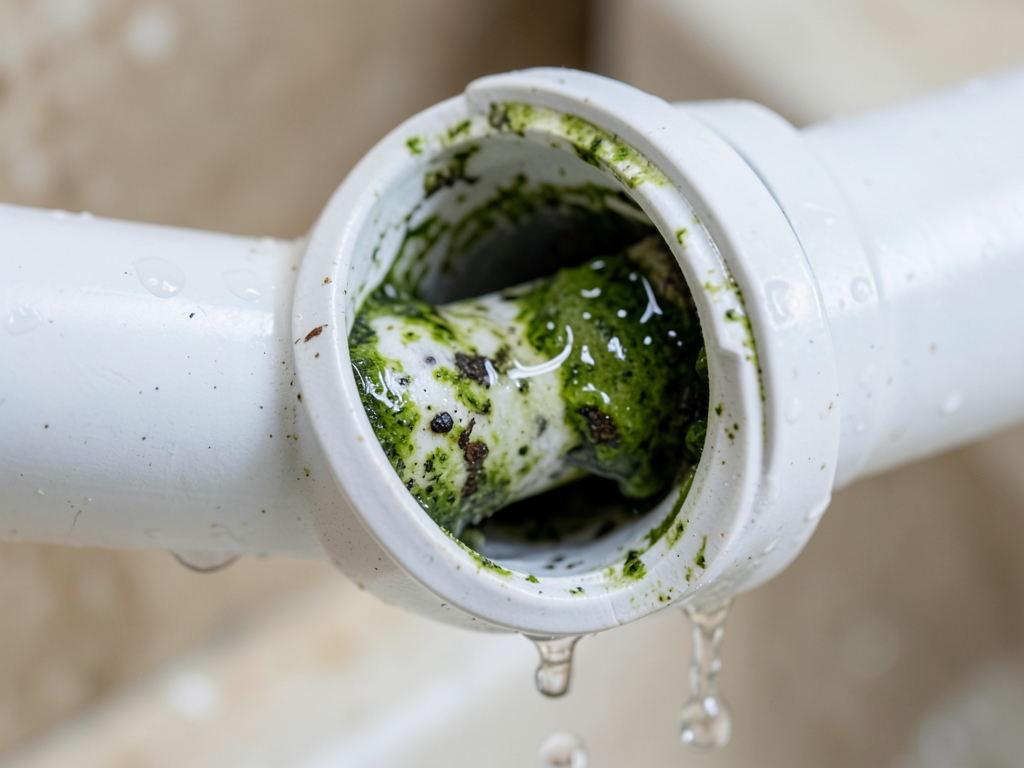
Algae thrives in our warm, wet environment. It forms a slimy biofilm that coats the inside of PVC drain pipes. Over time, this slime catches dust, dirt, and other debris. The combination creates a blockage that prevents water from draining properly. In New Orleans, this process happens faster than in drier climates.
Coastal salt air also contributes to the problem. Homes near Lake Pontchartrain or the Mississippi River experience accelerated corrosion of metal components and can see different types of biological growth in drain lines. The combination of salt, moisture, and heat creates a unique challenge for local HVAC systems.
Step-by-Step DIY: How to Clear Your Condensate Line with a Shop-Vac
Before attempting any DIY work, turn off your AC at the thermostat and the breaker box. Working on live electrical equipment near water is dangerous. If you’re not comfortable with these steps, call a professional.
Find your drain line. It’s usually a white PVC pipe near your air handler, often in the attic. Look for a T-shaped vent pipe with a cap on top. This is where you’ll access the line.
Remove the cap from the vent pipe. If you see standing water, you have a clog. Use a wet-dry shop vacuum to suck out the blockage. Seal the vacuum hose to the vent pipe with duct tape for maximum suction. Run the vacuum for 2-3 minutes.
After vacuuming, pour a mixture of one cup white vinegar and one cup water down the drain line. Vinegar kills algae and bacteria without damaging your pipes like bleach can. Let it sit for 30 minutes, then flush with clean water.
Test your system by running the AC for 15 minutes. Check the drain pan and line for proper drainage. If water still backs up, the clog is deeper in the line and requires professional equipment.
When to Call a Professional (The Risks of DIY Mistakes)
DIY clearing works for minor clogs, but some situations require professional help. If your vacuum can’t clear the blockage, the clog is likely deep in the line or in the drain pan itself. Professionals use specialized equipment like high-pressure water jets and video inspection cameras.
Older homes in New Orleans often have drain lines connected to cast iron or galvanized pipes. These can corrode and collapse, creating blockages that look like clogs but require pipe replacement. A professional can identify the difference.
Attempting to clear a severe clog with too much pressure can crack PVC pipes. This creates leaks inside your walls or attic that are harder to detect and repair. Professionals know the proper pressure levels for different pipe materials and ages.
If you see mold growth around your air handler or smell strong musty odors, you likely have mold in your ductwork as well. This requires professional mold remediation, not just drain cleaning. Mold spores can spread through your home’s air system, creating health hazards. Emergency Ductwork Repair.
Water damage from a backed-up drain can affect electrical components. If your thermostat or control board got wet, you risk electrical shorts or fires. A professional inspection can identify and address these hidden dangers.
The Role of the Float Switch: Your Home’s First Line of Defense
Your float switch is a simple but crucial safety device. It’s a small float that rises with water level in the drain pan. When water reaches a certain height, the float activates a switch that cuts power to your AC compressor.
This prevents your drain pan from overflowing and causing ceiling damage. However, many homeowners don’t know their float switch exists or where it’s located. Some older systems don’t have one at all, leaving your home vulnerable to water damage.
Float switches can fail. The float can get stuck, the switch can corrode, or wiring can come loose. During your annual maintenance, a technician should test your float switch to ensure it activates at the correct water level.
Some modern systems have secondary float switches that trigger an alarm or send an alert to your phone when water backs up. These provide early warning before damage occurs. If your system doesn’t have this feature, consider upgrading during your next service visit.
According to the International Mechanical Code Section 307.2.2, condensate drains must include a secondary drain or auxiliary drain pan with a separate drain line for units installed above finished spaces. This code requirement exists specifically to prevent ceiling damage from clogged primary drains.
Preventing Future Clogs in Southern Louisiana Climates
Prevention is much cheaper than emergency repairs. In New Orleans’ climate, you should clean your drain line every 3-6 months, not annually like in drier regions. Set calendar reminders for spring and fall maintenance.
Install a condensate drain line treatment tablet or stick. These slow-release products kill algae and bacteria as water flows past them. They’re inexpensive and can extend the time between manual cleanings by several months.
Check your drain line vent regularly. The vent cap can get clogged with debris, insects, or even bird nests. A blocked vent prevents proper drainage even if the main line is clear. Clean the vent opening with a small brush every few months.
Consider upgrading to a larger diameter drain line if you have an older 3/4-inch pipe. Modern systems often use 1-inch or larger lines that are less prone to clogging. This is especially important for homes near the coast where salt air accelerates biological growth.
Install a water alarm in your secondary drain pan. These inexpensive devices sound an alert when they detect water, giving you early warning of a developing clog before ceiling damage occurs.
Secondary Drain Pan Overflow: The Backup That Saves Your Ceiling
Your secondary drain pan sits under your air handler as a last defense against water damage. If your primary drain fails, water collects in this pan instead of dripping through your ceiling. However, secondary pans can also fail if not properly maintained.
Check your secondary pan every few months. Look for rust, cracks, or standing water. Even small cracks can leak water onto your ceiling over time. If you see rust, the pan needs replacement before it fails completely.
Some secondary pans have their own drain lines that direct water to an exterior wall or window. If you see water dripping from a small pipe outside during AC operation, that’s your secondary drain working. If it’s not dripping when your AC runs, your primary drain may be clogged.
According to building codes, secondary drain pans are required for air handlers installed in attics or above finished spaces. This requirement recognizes the severe damage that can occur when condensate drains fail in these locations.
Secondary pans should be made of rust-resistant material like stainless steel or heavy-duty plastic. Galvanized steel pans, common in older homes, typically last 10-15 years before developing leaks. If your system is older than that, inspect the pan closely.
Evaporator Coil Icing: The Hidden Cause of Drain Line Problems
Sometimes what looks like a drain line clog is actually caused by a frozen evaporator coil. When the coil freezes, it blocks airflow and causes the AC to shut down. When it thaws, the sudden rush of water can overwhelm your drain system.
Signs of a frozen coil include reduced cooling, ice visible on refrigerant lines, and the AC running constantly without cooling properly. If you notice these symptoms along with water dripping from your ceiling, you may have both problems.
Common causes of coil freezing include dirty air filters, low refrigerant levels, and malfunctioning fans. A dirty filter restricts airflow across the coil, causing it to get too cold. Low refrigerant pressure can also cause the coil to drop below freezing temperature.
If your coil is frozen, turn off the AC and let it thaw completely before attempting to clear the drain. Running a frozen system can damage the compressor. Once thawed, check your air filter and replace it if dirty. If problems persist, you need professional diagnosis.
In New Orleans’ humid climate, coil freezing often happens when systems are oversized for the space. An oversized AC cools too quickly without running long enough to remove humidity, leading to short cycling and coil problems. A professional load calculation can determine if your system is properly sized.
Cost Comparison: DIY vs Professional Drain Cleaning in New Orleans
DIY drain cleaning costs about $20-30 for supplies: vinegar, a shop vacuum rental, and basic tools. This works for minor clogs and regular maintenance. However, it won’t fix underlying problems like pipe damage or mold contamination.
Professional drain cleaning in the New Orleans metro area typically costs $150-300. This includes inspection, cleaning with professional equipment, testing all safety switches, and checking for related problems. Most companies offer this service as part of annual maintenance contracts.
Emergency service calls for active ceiling leaks cost $250-400, often with additional charges for after-hours service. These calls usually include immediate water damage assessment and temporary fixes to prevent further damage.
Complete drain line replacement costs $500-1,000 depending on accessibility and line length. This is necessary when pipes are cracked, collapsed, or made of outdated materials like galvanized steel that’s beyond repair.
Water damage repair from ceiling leaks can cost $1,000-5,000 or more, depending on the extent of damage. This includes drywall replacement, painting, and potentially mold remediation if water sat for days before detection.
Frequently Asked Questions
Why is my AC drain line clogging so frequently?
New Orleans’ high humidity and warm temperatures create ideal conditions for algae and bacteria growth. Homes near water bodies or in older neighborhoods with aging pipes may experience more frequent clogs. Regular maintenance every 3-4 months helps prevent this.
Can I use bleach instead of vinegar to clean my drain line?
Avoid bleach in older New Orleans homes. Bleach can damage PVC pipes and react with metal components in older systems. Vinegar is safer and equally effective at killing algae. For severe cases, professionals use specialized biocides designed for HVAC systems.
How do I know if my ceiling damage is from a roof leak or AC drain?
AC-related water spots typically appear near air vents and worsen when the AC runs. Roof leaks often show up as larger, more random stains and worsen during rain. If spots improve when you turn off the AC, it’s likely a drain issue.
Should I turn off my AC if I see water dripping?
Yes, turn off your AC immediately at the thermostat and breaker. Running a system with a clogged drain can cause extensive water damage. Leave it off until the drain line is cleared or a professional inspects it.
How long does professional drain cleaning take?
Most professional drain cleanings take 30-60 minutes. Emergency calls with active leaks may take longer due to water damage assessment and temporary repairs. Simple maintenance cleanings during scheduled visits are usually completed in under an hour.
Call (504) 355-2955 Today to Schedule Your Inspection
Don’t let a clogged drain line turn into a ceiling disaster. If you’re seeing water spots, smelling musty odors, or your AC keeps shutting off, call (504) 355-2955 today. Our technicians understand New Orleans’ unique humidity challenges and can diagnose problems before they cause thousands in damage.
We offer same-day service throughout the greater New Orleans area, including Metairie, Kenner, Gretna, and the West Bank. Our emergency response team is ready to stop that dripping ceiling before it ruins your home. HVAC Gretna.
Pick up the phone and call (504) 355-2955 before the next storm hits. A quick inspection now can save you from emergency repairs later. For more information, visit ASHRAE HVAC standards.
{
“@context”: “https://schema.org”,
“@type”: “BlogPosting”,
“headline”: “Why Water is Dripping from Your Ceiling (The Hidden Danger of Clogged Drain Lines)”,
“description”: “Is water dripping from your ceiling? Learn how clogged AC drain lines in New Orleans’ humid climate can cause hidden water damage and what to do about it.”,
“wordCount”: 2494,
“datePublished”: “2026-03-28T07:03:00.000Z”,
“dateModified”: “2026-03-28T07:03:00.000Z”,
“inLanguage”: “en-US”,
“mainEntityOfPage”: {
“@type”: “WebPage”,
“@id”: “https://pioneerhvacneworleans.com”
},
“publisher”: {
“@type”: “LocalBusiness”,
“name”: “Pioneer HVAC New Orleans”,
“url”: “https://pioneerhvacneworleans.com”
},
“author”: {
“@type”: “Organization”,
“name”: “Pioneer HVAC New Orleans”,
“url”: “https://pioneerhvacneworleans.com”
},
“image”: {
“@type”: “ImageObject”,
“url”: “https://pioneerhvacneworleans.com/wp-content/uploads/2026/03/why-water-is-dripping-from-your-ceiling-the-hidden-1.png”
}
}
{
“@context”: “https://schema.org”,
“@type”: “HVACBusiness”,
“name”: “Pioneer HVAC New Orleans”,
“url”: “https://pioneerhvacneworleans.com”,
“address”: {
“@type”: “PostalAddress”,
“addressLocality”: “New Orleans”
},
“areaServed”: {
“@type”: “City”,
“name”: “New Orleans”
}
}
{
“@context”: “https://schema.org”,
“@type”: “FAQPage”,
“mainEntity”: [
{
“@type”: “Question”,
“name”: “Why is my AC drain line clogging so frequently?”,
“acceptedAnswer”: {
“@type”: “Answer”,
“text”: “New Orleans’ high humidity and warm temperatures create ideal conditions for algae and bacteria growth. Homes near water bodies or in older neighborhoods with aging pipes may experience more frequent clogs. Regular maintenance every 3-4 months helps prevent this.”
}
},
{
“@type”: “Question”,
“name”: “Can I use bleach instead of vinegar to clean my drain line?”,
“acceptedAnswer”: {
“@type”: “Answer”,
“text”: “Avoid bleach in older New Orleans homes. Bleach can damage PVC pipes and react with metal components in older systems. Vinegar is safer and equally effective at killing algae. For severe cases, professionals use specialized biocides designed for HVAC systems.”
}
},
{
“@type”: “Question”,
“name”: “How do I know if my ceiling damage is from a roof leak or AC drain?”,
“acceptedAnswer”: {
“@type”: “Answer”,
“text”: “AC-related water spots typically appear near air vents and worsen when the AC runs. Roof leaks often show up as larger, more random stains and worsen during rain. If spots improve when you turn off the AC, it’s likely a drain issue.”
}
},
{
“@type”: “Question”,
“name”: “Should I turn off my AC if I see water dripping?”,
“acceptedAnswer”: {
“@type”: “Answer”,
“text”: “Yes, turn off your AC immediately at the thermostat and breaker. Running a system with a clogged drain can cause extensive water damage. Leave it off until the drain line is cleared or a professional inspects it.”
}
},
{
“@type”: “Question”,
“name”: “How long does professional drain cleaning take?”,
“acceptedAnswer”: {
“@type”: “Answer”,
“text”: “Most professional drain cleanings take 30-60 minutes. Emergency calls with active leaks may take longer due to water damage assessment and temporary repairs. Simple maintenance cleanings during scheduled visits are usually completed in under an hour.”
}
}
]
}
{
“@context”: “https://schema.org”,
“@type”: “BreadcrumbList”,
“itemListElement”: [
{
“@type”: “ListItem”,
“position”: 1,
“name”: “Home”,
“item”: “https://pioneerhvacneworleans.com”
},
{
“@type”: “ListItem”,
“position”: 2,
“name”: “Blog”,
“item”: “https://pioneerhvacneworleans.com/blog”
},
{
“@type”: “ListItem”,
“position”: 3,
“name”: “Why Water is Dripping from Your Ceiling (The Hidden Danger of Clogged Drain Lines)”
}
]
}
{
“@context”: “https://schema.org”,
“@type”: “Service”,
“serviceType”: “HVAC”,
“provider”: {
“@type”: “LocalBusiness”,
“name”: “Pioneer HVAC New Orleans”,
“url”: “https://pioneerhvacneworleans.com”
},
“areaServed”: {
“@type”: “City”,
“name”: “New Orleans”
},
“description”: “Is water dripping from your ceiling? Learn how clogged AC drain lines in New Orleans’ humid climate can cause hidden water damage and what to do about it.”
}