
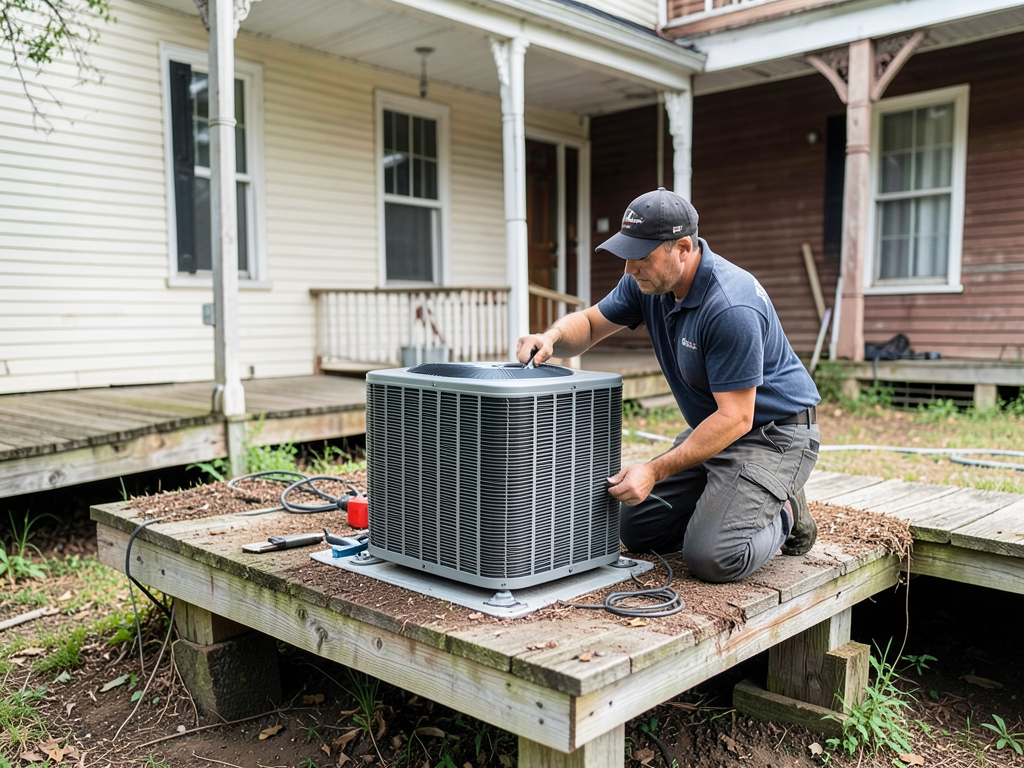
Living in a classic Seventh Ward shotgun home means dealing with New Orleans’ intense humidity and heat year-round. Many homeowners still rely on window units, but central air offers better comfort, efficiency, and home value. If you’re tired of noisy, inefficient window ACs, upgrading to central air conditioning is a smart move for your shotgun house. Get Your New Orleans AC Running Again with Our 24-Hour Emergency Repair Service.
Central air systems cool your entire home evenly, improve indoor air quality, and reduce humidity far better than window units. In a city where humidity often exceeds 90%, proper dehumidification is critical to prevent mold and protect your home’s structure. The conversion process requires careful planning, especially in historic neighborhoods where building codes and architectural preservation matter.
Before you begin, understand that shotgun homes present unique challenges. Narrow floor plans, plaster walls, and raised pier foundations affect ductwork routing and equipment placement. You’ll need a professional load calculation to size the system correctly for your home’s square footage and insulation levels. Skipping this step leads to oversized or undersized equipment, which wastes energy and shortens system life. ENERGY STAR air conditioning.
Understanding the Central Air Conversion Process
Converting from window units to central air involves several key stages. First, a licensed HVAC contractor performs a Manual J load calculation to determine your home’s cooling needs. This calculation considers square footage, window orientation, insulation, and local climate data specific to New Orleans. Manual J Load Calculation.
Next comes the ductwork design phase. In shotgun homes, traditional duct runs through walls and ceilings can be tricky. Contractors often use compact, high-velocity mini-duct systems that fit in tight spaces without major demolition. These systems use smaller ducts and can be routed through existing wall cavities or attic spaces. Emergency Ductwork Repair.
Electrical upgrades may be necessary since central air requires dedicated circuits and proper grounding. Your contractor will inspect your electrical panel and recommend upgrades if needed. This step is crucial for safety and code compliance.
Finally, the outdoor condenser unit placement must follow FEMA elevation requirements and historic district guidelines. In the Seventh Ward, many homes sit on raised foundations, which can help with condenser placement while keeping it above potential flood levels.
Cost Considerations for Central Air in New Orleans
The cost of converting to central air varies widely based on your home’s size, existing infrastructure, and chosen system type. For a typical 1,000-square-foot shotgun home, expect to invest between $5,000 and $12,000 for a complete central air installation.
Traditional ducted systems tend to cost more upfront but provide whole-home comfort. High-velocity mini-duct systems offer a middle ground, with installation costs typically 15-20% higher than standard ducted systems but with less invasive installation.
Ductless mini-split systems represent another option, especially for homes where traditional ductwork is impractical. These systems consist of an outdoor compressor and one or more indoor air handlers mounted on walls or ceilings. While mini-splits cost more per ton of cooling capacity, they avoid the expense and disruption of ductwork installation. Ductless Mini-Split Systems.
Don’t forget to factor in Entergy New Orleans rebates and federal tax credits under the Inflation Reduction Act. These incentives can reduce your net cost by 20-30%, making the conversion more affordable. Fighting New Orleans Humidity with a Professional Whole-Home Dehumidifier Installation.
Special Considerations for Historic Seventh Ward Homes
Living in a historic district adds layers of complexity to your central air conversion. The Historic District Landmarks Commission (HDLC) reviews exterior modifications, including condenser unit placement and any visible ductwork. You’ll need to submit plans for approval before beginning work.
Shotgun homes often feature original plaster walls, which can be damaged during traditional duct installation. High-velocity systems minimize this risk by using existing wall cavities. Some homeowners opt to run ductwork through closets or utility spaces to preserve original wall surfaces.
Raised pier foundations common in the Seventh Ward can actually benefit central air installation. The crawl space provides access for running refrigerant lines and electrical wiring without cutting through finished floors. However, proper vapor barriers and insulation are essential to prevent moisture problems.
Local building codes require specific clearances around condenser units for maintenance access and safety. In flood-prone areas, FEMA regulations mandate that outdoor equipment be elevated above the Base Flood Elevation (BFE). Your contractor must verify these requirements for your specific property.
Humidity Control and Indoor Air Quality Benefits
Central air systems excel at humidity control compared to window units. While window ACs cool the air, they often struggle to remove sufficient moisture in New Orleans’ climate. This leaves your home feeling clammy and creates ideal conditions for mold growth.
Modern central air systems include features like variable-speed blowers and smart thermostats that optimize dehumidification. Some systems pair with whole-home dehumidifiers for maximum moisture control. This combination keeps indoor humidity between 45-55%, which is ideal for comfort and mold prevention.
Indoor air quality also improves significantly with central air. These systems include high-efficiency filters that capture dust, pollen, and other airborne particles. Many homeowners in the Seventh Ward report fewer allergy symptoms after upgrading from window units.
Whole-home air purification systems can be integrated with your central air setup. These add-on components use UV light, activated carbon, or HEPA filtration to remove even more contaminants from your indoor air.
Navigating Permits and Local Regulations
Before starting your central air conversion, you’ll need to navigate several permit requirements. The City of New Orleans requires building permits for HVAC installations, including central air systems. Your contractor should handle permit applications, but understanding the process helps you plan the timeline.
Historic district properties need additional HDLC approval for any exterior modifications. This process typically takes 2-4 weeks and may require multiple submissions if your initial plans need revision. Work with a contractor experienced in historic renovations to streamline this process.
Electrical permits are also required for the wiring upgrades central air installation demands. The Louisiana State Licensing Board for Contractors mandates that all HVAC work be performed by licensed professionals. Verify your contractor’s license status before signing any agreements.
Post-installation inspections ensure your system meets all local codes and operates safely. These inspections cover electrical connections, refrigerant line installation, and proper equipment clearances.
Comparing System Types for Shotgun Homes
Choosing the right central air system for your shotgun home depends on several factors. Here’s a comparison of the main options available to Seventh Ward homeowners:
| System Type | Installation Impact | Energy Efficiency | Best For |
|---|---|---|---|
| Traditional Ducted | High – requires wall/ceiling cuts | Good – up to 16 SEER2 | Full renovations, new construction |
| High-Velocity Mini-Duct | Medium – uses existing cavities | Very Good – up to 18 SEER2 | Historic homes, minimal demolition |
| Ductless Mini-Split | Low – wall-mounted units only | Excellent – up to 20+ SEER2 | Room additions, difficult duct routes |
SEER2 ratings indicate efficiency, with higher numbers meaning lower energy costs. New Orleans’ climate demands systems rated for high humidity and heat. Look for models with enhanced dehumidification features and corrosion-resistant components to withstand the coastal environment.
High-velocity systems work particularly well in shotgun homes because they deliver powerful airflow through small ducts. This design minimizes temperature variations between rooms, which is important in narrow shotgun floor plans where air circulation can be challenging.
Energy Savings and Return on Investment
While central air requires a significant upfront investment, the long-term benefits often justify the cost. Entergy New Orleans customers who convert from window units to central air typically see 30-40% reductions in cooling costs during peak summer months.
Modern central air systems use R-454B refrigerant, which is more environmentally friendly than older refrigerants and often more efficient. This translates to lower energy bills and reduced environmental impact.
Home value also increases with central air installation. Real estate data shows that homes with central air conditioning in New Orleans command 5-10% higher prices than comparable homes with only window units. This premium is even higher in historic districts where modern amenities are highly valued.
Maintenance costs for central air are generally lower than maintaining multiple window units. Instead of cleaning and storing several ACs each season, you have one system that requires annual professional maintenance.
Choosing the Right Contractor
Selecting an experienced HVAC contractor is crucial for a successful central air conversion. Look for companies with specific experience in historic New Orleans homes and shotgun house renovations. Ask for references from other Seventh Ward homeowners who’ve completed similar projects.
Verify that your contractor holds a Louisiana state HVAC license and carries proper insurance. The Louisiana State Licensing Board for Contractors maintains an online verification tool for checking license status.
Request a detailed written estimate that includes load calculations, equipment specifications, and a timeline. Be wary of contractors who provide quotes without visiting your home first. Every shotgun house has unique characteristics that affect system design.
Ask about warranty coverage and maintenance plans. Quality contractors stand behind their work with comprehensive warranties on both equipment and labor. Regular maintenance plans can extend your system’s life and maintain efficiency.
Preparing Your Home for Installation
Before installation begins, prepare your home to minimize disruption. Clear areas where technicians will need access, including attics, crawl spaces, and utility closets. Remove valuable items from walls where ductwork might be installed.
Plan for temporary loss of cooling during installation. Most central air conversions take 2-4 days, during which your home won’t have air conditioning. Schedule the work during mild weather if possible, or arrange alternative cooling options.
Communicate with your neighbors about the upcoming work, especially if you live in a historic district where exterior modifications are visible. Good communication prevents misunderstandings about the construction process.
Keep all documentation related to your central air installation, including permits, warranties, and maintenance records. This paperwork is valuable for future home sales and warranty claims.
Frequently Asked Questions
How long does a central air conversion take?
Most central air conversions in shotgun homes take 2-4 days for the physical installation. However, the entire process from initial consultation to final inspection typically spans 2-6 weeks when you include permit approvals and equipment ordering.
Can I keep some window units after installing central air?
Yes, many homeowners keep window units for specific rooms or as backup cooling. However, running both systems simultaneously can create pressure imbalances and reduce central air efficiency. If you keep window units, use them only when central air isn’t running.
What size central air system do I need?
System size depends on your home’s square footage, insulation, and local climate. A typical 1,000-square-foot shotgun home in New Orleans needs a 2-2.5 ton system. Your contractor will perform a Manual J calculation to determine the exact size needed for your specific home. Why Your Lakeview Home Needs a High-Efficiency AC Unit to Combat Swampy Humidity.
Are there any tax incentives available?
Yes, federal tax credits under the Inflation Reduction Act provide up to 30% of installation costs for qualifying high-efficiency systems. Entergy New Orleans also offers rebates for energy-efficient HVAC equipment. These incentives can significantly reduce your net cost.
Will central air work with my home’s existing electrical system?
Many older shotgun homes need electrical upgrades to support central air. The system requires dedicated circuits and proper grounding. Your contractor will inspect your electrical panel and recommend any necessary upgrades to ensure safe, code-compliant operation.
Making the Right Choice for Your Seventh Ward Home
Upgrading from window units to central air in your Seventh Ward shotgun home is a significant investment that pays dividends in comfort, efficiency, and home value. The unique characteristics of shotgun architecture and New Orleans’ climate require careful planning and experienced installation.
Consider your priorities when choosing between traditional ducted systems, high-velocity mini-ducts, or ductless mini-splits. Each option has advantages depending on your home’s layout, your budget, and your comfort preferences.
Don’t let the complexity of historic district regulations or the disruption of installation deter you. The long-term benefits of central air far outweigh the temporary inconvenience. Your home will be more comfortable, your energy bills will decrease, and your indoor air quality will improve dramatically.
Ready to take the next step? Call (504) 355-2955 today to schedule your free in-home consultation. Our experienced technicians understand the unique challenges of Seventh Ward shotgun homes and can design a central air system that meets your needs while preserving your home’s character. Don’t wait for another sweltering New Orleans summer to push your window units to their limits.
Pick up the phone and call (504) 355-2955 now. Your comfortable, efficient, humidity-controlled home is just a phone call away.
{
“@context”: “https://schema.org”,
“@type”: “BlogPosting”,
“headline”: “Moving from Window Units to Central Air in Your Seventh Ward Shotgun Home”,
“description”: “Thinking about replacing window ACs with central air in your Seventh Ward shotgun house? Learn the process, costs, and local considerations from New Orleans HVAC pros.”,
“wordCount”: 2079,
“datePublished”: “2026-03-25T10:28:00.000Z”,
“dateModified”: “2026-03-25T10:28:00.000Z”,
“inLanguage”: “en-US”,
“mainEntityOfPage”: {
“@type”: “WebPage”,
“@id”: “https://pioneerhvacneworleans.com”
},
“publisher”: {
“@type”: “LocalBusiness”,
“name”: “Pioneer HVAC New Orleans”,
“url”: “https://pioneerhvacneworleans.com”
},
“author”: {
“@type”: “Organization”,
“name”: “Pioneer HVAC New Orleans”,
“url”: “https://pioneerhvacneworleans.com”
},
“image”: {
“@type”: “ImageObject”,
“url”: “https://pioneerhvacneworleans.com/wp-content/uploads/2026/03/moving-from-window-units-to-central-air-in-your-se-1.png”
}
}
{
“@context”: “https://schema.org”,
“@type”: “HVACBusiness”,
“name”: “Pioneer HVAC New Orleans”,
“url”: “https://pioneerhvacneworleans.com”,
“address”: {
“@type”: “PostalAddress”,
“addressLocality”: “New Orleans”
},
“areaServed”: {
“@type”: “City”,
“name”: “New Orleans”
}
}
{
“@context”: “https://schema.org”,
“@type”: “FAQPage”,
“mainEntity”: [
{
“@type”: “Question”,
“name”: “How long does a central air conversion take?”,
“acceptedAnswer”: {
“@type”: “Answer”,
“text”: “Most central air conversions in shotgun homes take 2-4 days for the physical installation. However, the entire process from initial consultation to final inspection typically spans 2-6 weeks when you include permit approvals and equipment ordering.”
}
},
{
“@type”: “Question”,
“name”: “Can I keep some window units after installing central air?”,
“acceptedAnswer”: {
“@type”: “Answer”,
“text”: “Yes, many homeowners keep window units for specific rooms or as backup cooling. However, running both systems simultaneously can create pressure imbalances and reduce central air efficiency. If you keep window units, use them only when central air isn’t running.”
}
},
{
“@type”: “Question”,
“name”: “What size central air system do I need?”,
“acceptedAnswer”: {
“@type”: “Answer”,
“text”: “System size depends on your home’s square footage, insulation, and local climate. A typical 1,000-square-foot shotgun home in New Orleans needs a 2-2.5 ton system. Your contractor will perform a Manual J calculation to determine the exact size needed for your specific home. Why Your Lakeview Home Needs a High-Efficiency AC Unit to Combat Swampy Humidity.”
}
},
{
“@type”: “Question”,
“name”: “Are there any tax incentives available?”,
“acceptedAnswer”: {
“@type”: “Answer”,
“text”: “Yes, federal tax credits under the Inflation Reduction Act provide up to 30% of installation costs for qualifying high-efficiency systems. Entergy New Orleans also offers rebates for energy-efficient HVAC equipment. These incentives can significantly reduce your net cost.”
}
},
{
“@type”: “Question”,
“name”: “Will central air work with my home’s existing electrical system?”,
“acceptedAnswer”: {
“@type”: “Answer”,
“text”: “Many older shotgun homes need electrical upgrades to support central air. The system requires dedicated circuits and proper grounding. Your contractor will inspect your electrical panel and recommend any necessary upgrades to ensure safe, code-compliant operation.”
}
}
]
}
{
“@context”: “https://schema.org”,
“@type”: “BreadcrumbList”,
“itemListElement”: [
{
“@type”: “ListItem”,
“position”: 1,
“name”: “Home”,
“item”: “https://pioneerhvacneworleans.com”
},
{
“@type”: “ListItem”,
“position”: 2,
“name”: “Blog”,
“item”: “https://pioneerhvacneworleans.com/blog”
},
{
“@type”: “ListItem”,
“position”: 3,
“name”: “Moving from Window Units to Central Air in Your Seventh Ward Shotgun Home”
}
]
}
{
“@context”: “https://schema.org”,
“@type”: “Service”,
“serviceType”: “HVAC”,
“provider”: {
“@type”: “LocalBusiness”,
“name”: “Pioneer HVAC New Orleans”,
“url”: “https://pioneerhvacneworleans.com”
},
“areaServed”: {
“@type”: “City”,
“name”: “New Orleans”
},
“description”: “Thinking about replacing window ACs with central air in your Seventh Ward shotgun house? Learn the process, costs, and local considerations from New Orleans HVAC pros.”
}