
How to Hide Your AC Unit with Landscaping Without Killing the Compressor
Want to hide that ugly AC unit without frying your compressor in the Louisiana heat? You’re not alone. New Orleans homeowners battle humidity and high cooling bills while trying to keep their yards beautiful. The trick is finding plants and materials that look good but still let your system breathe. This guide shows you how to balance curb appeal with cooling efficiency so your AC runs strong all summer long. Get Your New Orleans AC Running Again with Our 24-Hour Emergency Repair Service.
The 2-Foot Rule: Why Airflow Matters More Than Looks
Your condenser needs breathing room. The 2-foot clearance rule isn’t just a suggestion—it’s how your system stays alive. When plants grow too close, they trap heat and force your compressor to work overtime. In New Orleans’ 90% humidity, that extra strain can kill a unit in one brutal summer. Why Your Lakeview Home Needs a High-Efficiency AC Unit to Combat Swampy Humidity.
Think of your condenser like a car radiator. Block the fins and the engine overheats. Same principle here. That 2-foot zone around all sides needs open air to release heat. No exceptions. Not even for that gorgeous Confederate Jasmine your neighbor swears by.
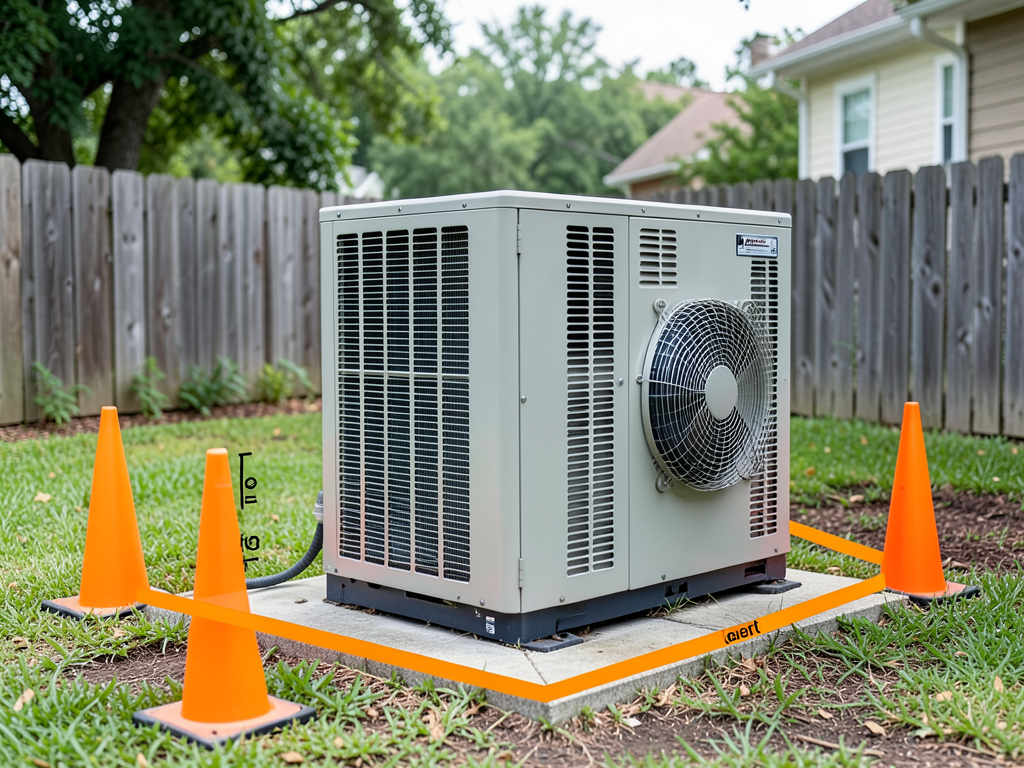
Image: Diagram showing 2-foot clearance zone around condenser with airflow arrows and heat dissipation patterns.
Native Louisiana Plants That Won’t Choke Your AC
Choosing the right plants makes all the difference. Some Louisiana natives actually help your system by creating shade without blocking airflow. Others will clog your coils faster than you can say “hurricane season.”
Good choices for New Orleans yards:
- Dwarf Palmetto – Stays under 4 feet and handles our humidity like a champ
- Yaupon Holly – Dense enough for screening but doesn’t shed like crazy
- Louisiana Phlox – Low-growing ground cover that won’t climb your unit
- Southern Wax Myrtle – Native shrub that tolerates our clay soil
Plants to avoid at all costs:
- Star Jasmine – Aggressive climber that will choke your condenser
- Wisteria – Beautiful but invasive and heavy enough to damage units
- Bamboo – Spreads underground and can grow through refrigerant lines
- Crape Myrtle – Drops leaves and flowers that clog coils
The key is choosing plants that grow up, not out. Tall, narrow shrubs give you privacy without creating a wall of foliage that traps heat.
Hardscaping Solutions: Rocks, Gravel, and Pavers
Sometimes the best landscaping is no landscaping at all. Hardscaping around your AC unit can solve multiple problems at once. River rock prevents mud splash-back on coils during our summer thunderstorms. Gravel deters termites and ants from nesting near your foundation. Pavers create a clean service path for technicians.
Here’s what works in New Orleans soil:
| Material | Pros | Cons | Best For |
|---|---|---|---|
| River Rock | Natural look, good drainage, termite resistant | Can shift during heavy rain | Areas near Lake Pontchartrain |
| Cypress Mulch | Affordable, easy to install | Attracts termites, washes away in storms | Raised beds away from unit |
| Concrete Pavers | Durable, clean look, pest resistant | Can crack from soil subsidence | Service access paths |
| Decomposed Granite | Excellent drainage, stabilizes soil | Can track inside on shoes | High-traffic areas |
New Orleans’ high water table means you need materials that won’t float away during a storm. Heavy river rock stays put better than lightweight mulch. Plus, it won’t harbor the Formosan termites that love our humid climate. Fighting New Orleans Humidity with a Professional Whole-Home Dehumidifier Installation.
Service Access: The Technician’s Path
Here’s something most homeowners forget: your AC tech needs to reach the unit. The National Electrical Code requires a clear 3-foot wide path to the electrical disconnect. That means no thorny roses or dense hedges blocking the way. National Renewable Energy Laboratory.
Think about the service tech’s perspective. They need to:
- Reach the electrical disconnect without a machete
- Access refrigerant lines for pressure checks
- Clean coils without trampling your prized azaleas
- Replace parts without dismantling your privacy screen
Smart homeowners create a “service aisle” using stepping stones or gravel. It keeps feet clean and gives technicians a clear path. Your compressor will thank you when they can work efficiently instead of fighting through your landscaping.
Drainage and Elevation: New Orleans Specific Challenges
New Orleans presents unique challenges for AC placement. Our high water table means many units sit on raised pads. Poor drainage around these pads can cause water to pool, leading to rust and electrical issues.
The solution? Create a slight slope away from your unit using gravel or crushed stone. A 1-2% grade keeps water moving during our frequent afternoon thunderstorms. For homes in flood zones, consider elevating the entire landscaping bed 6-8 inches above grade.
Local building codes in Orleans Parish require outdoor equipment to be:
- Mounted on a concrete or composite pad
- Elevated at least 6 inches above the surrounding grade
- Positioned to allow for proper drainage
These aren’t just suggestions. They’re code requirements that protect your investment from our notorious flooding.
Seasonal Maintenance for Gulf Coast Gardens
New Orleans’ extended growing season means your AC landscaping needs year-round attention. What works in April might be a problem by August.
Spring (March-May): Clear winter debris, check for termite tubes, trim back any growth that’s creeping into the 2-foot zone.
Summer (June-August): Monitor for vine growth, especially after summer thunderstorms. Check for mold on shaded surfaces.
Fall (September-November): Hurricane season cleanup is critical. Remove fallen branches and leaves that can clog coils.
Winter (December-February): Our “winter” is mild, but it’s the perfect time to prune back aggressive growers before spring growth explodes.
Local landscapers know that New Orleans plants grow 12 months a year. What looks manageable in January can become a jungle by June.
Shade vs. Airflow: Finding the Balance
Everyone wants to shade their AC unit. It seems logical—keep the sun off and the system cools easier, right? Not exactly.
Strategic shade can reduce your energy bills by 10%, but only if done correctly. A lattice screen 3 feet from the unit provides shade without blocking airflow. Dense shrubs planted 2 feet away create a heat trap that costs you more in electricity.
The sweet spot is creating ambient shade with tall, narrow plants or structures. Think vertical, not horizontal. A small tree 10 feet away provides afternoon shade without interfering with the condenser’s operation.
Noise Reduction Through Smart Planting
Your AC doesn’t have to be an eyesore AND an ear sore. Strategic planting can reduce noise by 5-10 decibels—enough to make a noticeable difference.
The trick is layering. Use a combination of:
- Tall, dense shrubs (like Yaupon Holly) 3-4 feet from the unit
- Medium-height plants (like Dwarf Palmetto) in the middle zone
- Ground covers that won’t grow into the clearance zone
This creates a natural sound barrier that absorbs compressor noise without blocking the airflow your system needs to survive our brutal summers.
Before You Plant: The Pre-Installation Checklist
Don’t start digging until you’ve checked these boxes:
- Measure your current clearance zone (use a tape measure, not your eye)
- Check local ordinances for setback requirements
- Locate underground utilities (call 811 before you dig)
- Consider mature plant sizes, not just nursery dimensions
- Plan for service access and maintenance
- Account for our high water table and drainage needs
- Choose plants suited to USDA Zone 9b
Skipping these steps can lead to expensive mistakes. That cute 1-gallon shrub might grow into a 10-foot monster that blocks your entire condenser.
Common Mistakes New Orleans Homeowners Make
Even well-intentioned landscaping can kill your AC. Here are the mistakes we see most often:
- Planting too close to the unit “just until it grows bigger”
- Using landscape fabric that traps moisture against the pad
- Installing privacy screens that block 360-degree airflow
- Choosing fast-growing invasive species that take over
- Forgetting about seasonal leaf drop from Live Oaks
- Ignoring the 3-foot service path requirement
Each of these mistakes can reduce your AC’s efficiency by 15-30%, costing you hundreds in extra electricity each summer.
When to Call a Professional
Some landscaping jobs are DIY-friendly. Others need professional help. Call an HVAC contractor if:
- Your unit is already surrounded by mature landscaping
- You’re unsure about clearance requirements
- Your condenser sits in a difficult-to-access location
- You need to elevate or reposition the unit for drainage
- You’re planning a complete yard redesign around existing equipment
A professional can assess your specific situation and recommend solutions that protect both your landscaping investment and your AC system.
Frequently Asked Questions
Can I plant flowers around my AC unit?
Yes, but choose low-growing, non-invasive varieties. Annual flowers that stay under 12 inches work well. Avoid anything that drops excessive debris or has aggressive root systems.
How much does poor landscaping really affect my AC’s efficiency?
Restricted airflow can reduce efficiency by 15-30%. In extreme cases, it can cause your compressor to overheat and fail completely, costing $2,000-$5,000 to replace.
Should I shade my AC unit from the afternoon sun?
Strategic shade helps, but only if it doesn’t block airflow. A lattice screen 3 feet away or tall plants 4-5 feet from the unit provide shade without causing problems.
What’s the best ground cover around an AC unit?
River rock or decomposed granite work best in New Orleans. They provide drainage, deter pests, and won’t wash away during our frequent storms.
How often should I clean around my AC unit?
Check monthly during growing season. Clear debris after every major storm. Professional coil cleaning is recommended annually, especially if you have trees that drop leaves or flowers nearby.. Read more about Why Magnolia Leaves and Crepe Myrtle Blooms are Secretly Killing Your Metairie AC Unit.
Protect Your Investment This Summer
Your AC works hard enough battling New Orleans humidity without fighting through a jungle of landscaping. The right plants and materials can enhance your home’s beauty while actually improving your system’s efficiency.
But here’s the truth: even perfect landscaping won’t help if your system isn’t running at peak efficiency. Dirty coils, low refrigerant, or a failing compressor will cost you money no matter how pretty the plants around it are.
Call (504) 355-2955 today to schedule your pre-summer AC tune-up. Our technicians will check your system’s performance and give you specific landscaping recommendations for your yard. Don’t wait until your compressor fails on the hottest day of the year.
Pick up the phone and call (504) 355-2955 before the next storm hits. Your AC—and your wallet—will thank you. For more information, visit EPA.
{
“@context”: “https://schema.org”,
“@type”: “BlogPosting”,
“headline”: “How to Hide Your AC Unit with Landscaping Without Killing the Compressor”,
“description”: “Learn how to hide your AC unit with landscaping in New Orleans without blocking airflow or killing your compressor. Expert tips for humid climate survival.”,
“wordCount”: 1712,
“datePublished”: “2026-05-24T14:34:00.000Z”,
“dateModified”: “2026-05-24T14:34:00.000Z”,
“inLanguage”: “en-US”,
“mainEntityOfPage”: {
“@type”: “WebPage”,
“@id”: “https://pioneerhvacneworleans.com”
},
“publisher”: {
“@type”: “LocalBusiness”,
“name”: “Pioneer HVAC New Orleans”,
“url”: “https://pioneerhvacneworleans.com”
},
“author”: {
“@type”: “Organization”,
“name”: “Pioneer HVAC New Orleans”,
“url”: “https://pioneerhvacneworleans.com”
},
“image”: {
“@type”: “ImageObject”,
“url”: “https://pioneerhvacneworleans.com/wp-content/uploads/2026/03/how-to-hide-your-ac-unit-with-landscaping-without-1.png”
}
}
{
“@context”: “https://schema.org”,
“@type”: “HVACBusiness”,
“name”: “Pioneer HVAC New Orleans”,
“url”: “https://pioneerhvacneworleans.com”,
“address”: {
“@type”: “PostalAddress”,
“addressLocality”: “New Orleans”
},
“areaServed”: {
“@type”: “City”,
“name”: “New Orleans”
}
}
{
“@context”: “https://schema.org”,
“@type”: “FAQPage”,
“mainEntity”: [
{
“@type”: “Question”,
“name”: “Can I plant flowers around my AC unit?”,
“acceptedAnswer”: {
“@type”: “Answer”,
“text”: “Yes, but choose low-growing, non-invasive varieties. Annual flowers that stay under 12 inches work well. Avoid anything that drops excessive debris or has aggressive root systems.”
}
},
{
“@type”: “Question”,
“name”: “How much does poor landscaping really affect my AC’s efficiency?”,
“acceptedAnswer”: {
“@type”: “Answer”,
“text”: “Restricted airflow can reduce efficiency by 15-30%. In extreme cases, it can cause your compressor to overheat and fail completely, costing $2,000-$5,000 to replace.”
}
},
{
“@type”: “Question”,
“name”: “Should I shade my AC unit from the afternoon sun?”,
“acceptedAnswer”: {
“@type”: “Answer”,
“text”: “Strategic shade helps, but only if it doesn’t block airflow. A lattice screen 3 feet away or tall plants 4-5 feet from the unit provide shade without causing problems.”
}
},
{
“@type”: “Question”,
“name”: “What’s the best ground cover around an AC unit?”,
“acceptedAnswer”: {
“@type”: “Answer”,
“text”: “River rock or decomposed granite work best in New Orleans. They provide drainage, deter pests, and won’t wash away during our frequent storms.”
}
},
{
“@type”: “Question”,
“name”: “How often should I clean around my AC unit?”,
“acceptedAnswer”: {
“@type”: “Answer”,
“text”: “Check monthly during growing season. Clear debris after every major storm. Professional coil cleaning is recommended annually, especially if you have trees that drop leaves or flowers nearby.”
}
}
]
}
{
“@context”: “https://schema.org”,
“@type”: “BreadcrumbList”,
“itemListElement”: [
{
“@type”: “ListItem”,
“position”: 1,
“name”: “Home”,
“item”: “https://pioneerhvacneworleans.com”
},
{
“@type”: “ListItem”,
“position”: 2,
“name”: “Blog”,
“item”: “https://pioneerhvacneworleans.com/blog”
},
{
“@type”: “ListItem”,
“position”: 3,
“name”: “How to Hide Your AC Unit with Landscaping Without Killing the Compressor”
}
]
}
{
“@context”: “https://schema.org”,
“@type”: “Service”,
“serviceType”: “HVAC”,
“provider”: {
“@type”: “LocalBusiness”,
“name”: “Pioneer HVAC New Orleans”,
“url”: “https://pioneerhvacneworleans.com”
},
“areaServed”: {
“@type”: “City”,
“name”: “New Orleans”
},
“description”: “Learn how to hide your AC unit with landscaping in New Orleans without blocking airflow or killing your compressor. Expert tips for humid climate survival.”
}