
Climate Control Options for Custom Wine Cellars in New Orleans Luxury Homes
Building a wine cellar in New Orleans requires specialized climate control systems that can handle the city’s extreme humidity and heat. Standard air conditioning cannot maintain the precise temperature and humidity levels needed to properly age wine. Your collection needs a dedicated cooling system that manages both temperature at 55-57°F and humidity between 50-70% while fighting against the Gulf Coast’s 90%+ relative humidity. Get Your New Orleans AC Running Again with Our 24-Hour Emergency Repair Service.
Wine cellars in New Orleans face unique challenges. The high water table and frequent flooding mean basements often require specialized vapor barriers and drainage systems. Historic Garden District homes with their thick plaster walls and limited mechanical space need carefully engineered solutions. Whether you’re building in Audubon Place, English Turn, or a French Quarter condo, the cooling system must be designed specifically for your space’s heat load, insulation values, and local climate conditions. Fighting New Orleans Humidity with a Professional Whole-Home Dehumidifier Installation.
Understanding New Orleans Wine Cellar Requirements
New Orleans’ climate creates specific demands for wine storage. The extended cooling season from March through November means your system runs nearly year-round. The combination of high heat index values and corrosive salt air near Lake Pontchartrain accelerates equipment wear. You need systems with corrosion-resistant components and redundant controls to protect collections worth thousands or even millions of dollars.
Building codes in Orleans Parish require specific considerations for wine cellar installations. The International Mechanical Code Section 1101 mandates proper ventilation and condensate disposal for refrigeration equipment. FEMA elevation requirements affect where condensing units can be placed in flood-prone areas. Your contractor should understand these local requirements and how they impact your cellar design. International Mechanical Code.
Types of Wine Cooling Systems Available
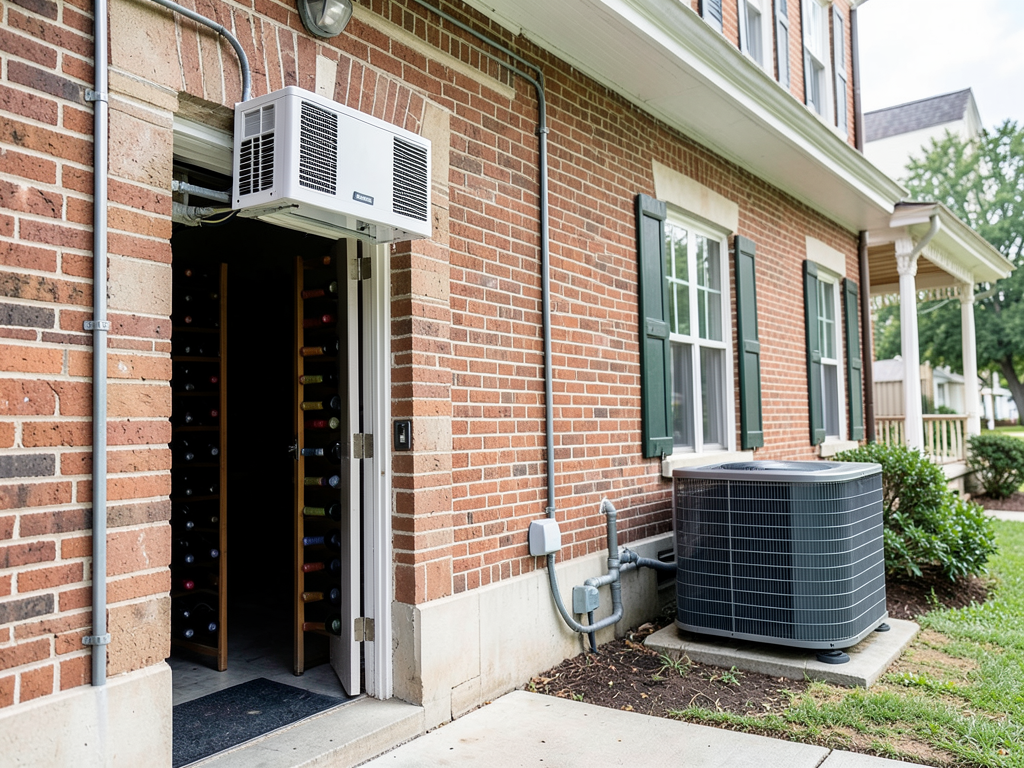
Self-contained through-the-wall units offer the simplest installation for smaller cellars up to 500 cubic feet. These systems mount through an exterior wall and work well in Metairie ranch homes or Uptown shotgun houses where space is limited. The evaporator and condenser are in one package, making them cost-effective for basic installations.
Ducted split systems separate the evaporator inside your cellar from the condenser outside. This configuration works best for larger collections in Lakeview estates or Audubon homes where noise reduction matters. The evaporator can be mounted above the door or in a nearby mechanical closet, while the condenser sits on the ground outside. EPA equipment licensing requirements.
Ductless split systems provide the quietest operation and most flexible installation. These systems work exceptionally well in historic homes where preserving architectural integrity matters. The small refrigerant lines can run through existing wall cavities without major demolition, making them ideal for French Quarter renovations. Ductless Mini-Split Systems.
Key Components for New Orleans Installations
Vapor barriers are critical in New Orleans wine cellars. The local high water table means moisture constantly tries to enter your space. A proper vapor barrier system includes 6-mil polyethylene sheeting on walls and floors, sealed seams, and continuous insulation. Without this protection, humidity levels spike and your cooling system works overtime.
Insulation requirements in South Louisiana exceed national standards. While most regions use R-13 for walls, New Orleans cellars need R-19 or higher due to the extreme outdoor temperatures. Closed-cell spray foam provides both insulation and an air barrier, preventing the condensation that damages wine labels and promotes mold growth.
Condensate management becomes critical in our climate. A 500-bottle collection can produce several gallons of water daily through condensation alone. Your system needs a dedicated condensate pump with backup float switch and alarm. Many Garden District homeowners connect this to their smart home system for remote monitoring. Why Your Lakeview Home Needs a High-Efficiency AC Unit to Combat Swampy Humidity.
Energy Efficiency Considerations
Wine cellar cooling in New Orleans consumes significant electricity due to the long cooling season. Modern systems with ECM motors and variable-speed compressors can reduce energy use by 30-40% compared to older models. Look for units with Energy Star certification and high SEER ratings.
Smart controls allow you to monitor and adjust your cellar remotely. These systems track temperature, humidity, door openings, and power status. Many New Orleans collectors receive alerts when conditions drift outside setpoints, allowing them to address issues before wine quality suffers. Some systems integrate with home automation platforms for comprehensive monitoring.
Geothermal options exist for environmentally conscious collectors. These systems use the earth’s stable temperature to reduce cooling loads, though installation costs run 40-50% higher than conventional systems. They work particularly well in areas like Old Metairie with larger lots where ground loops can be installed.
Installation Best Practices for Local Homes
Historic home considerations affect every aspect of wine cellar installation. Plaster walls in 100-year-old homes cannot support heavy equipment without reinforcement. Limited attic access in shotgun houses requires creative routing of refrigerant lines. Many Garden District installations use exterior-mounted equipment to preserve interior spaces.
Noise management becomes critical in luxury homes. Modern wine cooling units operate at 45-55 decibels, but this can still disturb bedroom areas in smaller homes. Sound barriers, vibration isolation mounts, and strategic equipment placement minimize noise transmission through walls and floors.
Access for maintenance must be planned during design. Wine cooling systems need annual professional service and occasional repairs. Installing equipment where technicians can easily reach it reduces service costs and prevents damage to finished spaces. Many New Orleans contractors build removable panels or access doors during construction.
Common Problems and Solutions
Humidity swings plague many New Orleans wine cellars. The Entergy power grid’s instability causes frequent outages that reset systems to default settings. Battery backup thermostats and smart controls that remember settings prevent these issues. Some collectors install whole-house surge protection to safeguard expensive cooling equipment.
Cork drying occurs when humidity drops below 50%. This allows oxygen to enter bottles and ruins wine. New Orleans’ air conditioning systems often create this problem by removing too much moisture. Dedicated wine cooling systems include humidifiers that maintain optimal levels without manual intervention.
Temperature fluctuations stress wine and accelerate aging. Standard thermostats have 2-3°F dead bands, but wine needs ±0.5°F stability. Wine-specific controllers use proportional-integral-derivative algorithms to maintain precise temperatures. These systems cost more but protect collections from heat damage during South Louisiana’s hottest months.
Maintenance Requirements
Wine cooling systems in New Orleans need biannual professional maintenance due to the harsh climate. Salt air corrodes aluminum fins and copper tubing. Technicians should check refrigerant levels, clean coils, inspect electrical connections, and test safety controls each spring before the cooling season begins.
Air filter replacement becomes critical in our humid environment. Mold and mildew can grow in dirty filters, then spread through your cellar. Replace filters every 90 days minimum, or more often if you notice musty odors. Some collectors use HEPA filters to protect expensive collections from airborne contaminants.
Condensate drain maintenance prevents flooding disasters. The high mineral content in New Orleans water causes scale buildup that clogs drains. Annual cleaning with vinegar solution and installing algae tabs in the drain pan prevents these blockages. Many systems now include automatic drain line cleaning functions.
Cost Factors and ROI
Wine cellar cooling system costs in New Orleans range from $3,500 for small self-contained units to $15,000+ for large split systems with premium controls. Installation complexity significantly affects pricing. Historic home retrofits often cost 30-50% more due to specialized labor and materials required.
Energy costs for wine cellars run $50-200 monthly depending on size and efficiency. The extended cooling season means annual electricity costs exceed those in cooler climates. However, proper storage prevents wine spoilage, which can cost thousands in lost inventory. Most collectors find the investment worthwhile for protecting their collections.
Insurance considerations affect system selection. Some carriers offer premium discounts for monitored wine storage systems that prevent catastrophic losses. Document your collection and system specifications for claims purposes. Many New Orleans collectors maintain separate wine insurance policies that require specific climate control documentation.
Smart Technology Integration
Modern wine cellars integrate with whole-home automation systems. Touchscreen controllers allow you to adjust settings, review historical data, and receive alerts from your phone. Integration with security systems can lock the door when alarms trigger or notify you of unauthorized access.
Temperature and humidity data logging helps optimize storage conditions. Many collectors review monthly reports to identify patterns and adjust settings seasonally. Some systems automatically adjust for seasonal changes in New Orleans’ climate without manual intervention.
Remote monitoring services provide 24/7 oversight for valuable collections. These services notify you and your contractor of problems before they cause damage. Some New Orleans collectors use these services when traveling during hurricane season, ensuring their collections remain protected even during evacuations.
Comparing System Types
| System Type | Best For | Cost Range | Noise Level |
|---|---|---|---|
| Through-the-Wall | Small cellars, limited space | $3,500 – $6,000 | 55-65 dB |
| Ducted Split | Medium-large collections, noise sensitive | $8,000 – $12,000 | 45-55 dB |
| Ductless Split | Historic homes, premium installations | $10,000 – $15,000+ | 40-50 dB |
Installation Timeline and Process
Proper wine cellar installation requires careful planning and execution. The process typically spans 4-8 weeks from initial consultation to final commissioning. Your contractor should provide detailed timelines and coordinate with other trades working on your project.
Permitting in Orleans Parish adds 2-3 weeks to most projects. The city requires mechanical permits for all refrigeration equipment. Historic district installations may need additional approvals from the Vieux Carré Commission or Historic District Landmarks Commission.
Professional installation includes system commissioning and calibration. Technicians verify refrigerant charge, adjust airflow, and program controls for your specific collection size and local climate conditions. They should provide operating manuals and warranty information before project completion.
Emergency Preparedness
Hurricane season requires specific preparations for wine cellars. Battery backup systems keep critical components running during power outages. Some collectors install small generators dedicated to wine storage. Temperature alarms alert you when conditions drift outside safe ranges during evacuations.
Flood protection becomes critical in New Orleans’ low-lying areas. Elevate equipment above BFE (Base Flood Elevation) when possible. Install water sensors that shut down systems if flooding occurs. Consider portable cooling options for evacuation scenarios where you might need to transport valuable bottles.
Backup cooling methods provide insurance against system failures. Small portable units can maintain temperatures for several days during repairs. Some collectors maintain relationships with multiple contractors to ensure rapid response when problems occur.
Choosing the Right Contractor
Wine cellar cooling requires specialized expertise beyond standard HVAC. Look for contractors with specific experience in wine storage applications. They should understand psychrometrics, vapor barrier installation, and the unique demands of New Orleans’ climate. Expert Furnace Repair in Gretna to Keep Your Family Warm on Chilly Delta Nights.
Certifications matter in this specialized field. NATE certification for HVAC technicians and specific training from wine cooling manufacturers indicate proper qualifications. Ask for references from other wine collectors in your area and examples of similar installations.
Local knowledge proves essential for New Orleans installations. Contractors should understand local building codes, soil conditions, and historic home constraints. They need relationships with local inspectors and experience navigating the city’s permitting process.
Call (504) 355-2955 today to schedule your wine cellar cooling consultation. Our specialists understand the unique challenges of New Orleans’ climate and can design a system that protects your collection while meeting your home’s specific requirements.
Frequently Asked Questions
What size cooling system do I need for my wine cellar?
System size depends on your cellar’s volume, insulation levels, and local climate. A 150-square-foot cellar in New Orleans typically needs 3,000-4,000 BTU of cooling capacity. Our technicians calculate precise loads based on your specific conditions and collection size.
How much does it cost to run a wine cellar cooling system in New Orleans?
Monthly operating costs range from $50-200 depending on system size and efficiency. The extended cooling season means annual costs run $600-2,400. High-efficiency systems with smart controls can reduce these costs by 30-40% while providing better temperature stability.
Can I use my regular air conditioner for my wine cellar?
Standard air conditioning cannot maintain the precise 55-57°F temperature and 50-70% humidity needed for wine storage. Regular AC systems freeze at these temperatures and remove too much moisture, causing corks to dry out and wine to spoil. You need a dedicated wine cooling system.
How long does wine cellar cooling system installation take?
Installation typically requires 2-3 days for the mechanical work, plus additional time for electrical connections and controls programming. The entire process from consultation to completion usually spans 4-8 weeks, including permitting and any necessary structural modifications.
What maintenance does a wine cellar cooling system need?
Biannual professional maintenance includes coil cleaning, refrigerant level checks, electrical connection inspection, and control calibration. You should replace air filters every 90 days and clean condensate drains annually. Our maintenance plans include priority service and annual tune-ups to protect your investment.
- Assess Your Collection Size
Determine the number of bottles and available space to calculate cooling requirements.
- Evaluate Your Space
Consider insulation, vapor barriers, and existing mechanical access for installation planning.
- Select System Type
Choose between through-the-wall, ducted split, or ductless split based on space and budget.
- Plan for Local Conditions
Account for New Orleans humidity, salt air, and flood zone requirements.
- Choose Qualified Contractor
Select specialists with wine cellar experience and local code knowledge.
{
“@context”: “https://schema.org”,
“@type”: “BlogPosting”,
“headline”: “Climate Control Options for Custom Wine Cellars in New Orleans Luxury Homes”,
“description”: “Discover specialized wine cellar cooling systems for New Orleans homes. Learn about humidity control, vapor barriers, and energy-efficient options to protect your collection.”,
“wordCount”: 2199,
“datePublished”: “2026-05-13T11:44:00.000Z”,
“dateModified”: “2026-05-13T11:44:00.000Z”,
“inLanguage”: “en-US”,
“mainEntityOfPage”: {
“@type”: “WebPage”,
“@id”: “https://pioneerhvacneworleans.com”
},
“publisher”: {
“@type”: “LocalBusiness”,
“name”: “Pioneer HVAC New Orleans”,
“url”: “https://pioneerhvacneworleans.com”
},
“author”: {
“@type”: “Organization”,
“name”: “Pioneer HVAC New Orleans”,
“url”: “https://pioneerhvacneworleans.com”
},
“image”: {
“@type”: “ImageObject”,
“url”: “https://pioneerhvacneworleans.com/wp-content/uploads/2026/03/climate-control-options-for-custom-wine-cellars-in-1.png”
}
}
{
“@context”: “https://schema.org”,
“@type”: “HVACBusiness”,
“name”: “Pioneer HVAC New Orleans”,
“url”: “https://pioneerhvacneworleans.com”,
“address”: {
“@type”: “PostalAddress”,
“addressLocality”: “New Orleans”
},
“areaServed”: {
“@type”: “City”,
“name”: “New Orleans”
}
}
{
“@context”: “https://schema.org”,
“@type”: “FAQPage”,
“mainEntity”: [
{
“@type”: “Question”,
“name”: “What size cooling system do I need for my wine cellar?”,
“acceptedAnswer”: {
“@type”: “Answer”,
“text”: “System size depends on your cellar’s volume, insulation levels, and local climate. A 150-square-foot cellar in New Orleans typically needs 3,000-4,000 BTU of cooling capacity. Our technicians calculate precise loads based on your specific conditions and collection size.”
}
},
{
“@type”: “Question”,
“name”: “How much does it cost to run a wine cellar cooling system in New Orleans?”,
“acceptedAnswer”: {
“@type”: “Answer”,
“text”: “Monthly operating costs range from $50-200 depending on system size and efficiency. The extended cooling season means annual costs run $600-2,400. High-efficiency systems with smart controls can reduce these costs by 30-40% while providing better temperature stability.”
}
},
{
“@type”: “Question”,
“name”: “Can I use my regular air conditioner for my wine cellar?”,
“acceptedAnswer”: {
“@type”: “Answer”,
“text”: “Standard air conditioning cannot maintain the precise 55-57°F temperature and 50-70% humidity needed for wine storage. Regular AC systems freeze at these temperatures and remove too much moisture, causing corks to dry out and wine to spoil. You need a dedicated wine cooling system.”
}
},
{
“@type”: “Question”,
“name”: “How long does wine cellar cooling system installation take?”,
“acceptedAnswer”: {
“@type”: “Answer”,
“text”: “Installation typically requires 2-3 days for the mechanical work, plus additional time for electrical connections and controls programming. The entire process from consultation to completion usually spans 4-8 weeks, including permitting and any necessary structural modifications.”
}
},
{
“@type”: “Question”,
“name”: “What maintenance does a wine cellar cooling system need?”,
“acceptedAnswer”: {
“@type”: “Answer”,
“text”: “Biannual professional maintenance includes coil cleaning, refrigerant level checks, electrical connection inspection, and control calibration. You should replace air filters every 90 days and clean condensate drains annually. Our maintenance plans include priority service and annual tune-ups to protect your investment.”
}
}
]
}
{
“@context”: “https://schema.org”,
“@type”: “HowTo”,
“name”: “How to Choose Wine Cellar Cooling”,
“step”: [
{
“@type”: “HowToStep”,
“position”: 1,
“name”: “Assess Your Collection Size”,
“text”: “Determine the number of bottles and available space to calculate cooling requirements.”
},
{
“@type”: “HowToStep”,
“position”: 2,
“name”: “Evaluate Your Space”,
“text”: “Consider insulation, vapor barriers, and existing mechanical access for installation planning.”
},
{
“@type”: “HowToStep”,
“position”: 3,
“name”: “Select System Type”,
“text”: “Choose between through-the-wall, ducted split, or ductless split based on space and budget.”
},
{
“@type”: “HowToStep”,
“position”: 4,
“name”: “Plan for Local Conditions”,
“text”: “Account for New Orleans humidity, salt air, and flood zone requirements.”
},
{
“@type”: “HowToStep”,
“position”: 5,
“name”: “Choose Qualified Contractor”,
“text”: “Select specialists with wine cellar experience and local code knowledge.”
}
],
“image”: “https://pioneerhvacneworleans.com/wp-content/uploads/2026/03/climate-control-options-for-custom-wine-cellars-in-1.png”
}
{
“@context”: “https://schema.org”,
“@type”: “BreadcrumbList”,
“itemListElement”: [
{
“@type”: “ListItem”,
“position”: 1,
“name”: “Home”,
“item”: “https://pioneerhvacneworleans.com”
},
{
“@type”: “ListItem”,
“position”: 2,
“name”: “Blog”,
“item”: “https://pioneerhvacneworleans.com/blog”
},
{
“@type”: “ListItem”,
“position”: 3,
“name”: “Climate Control Options for Custom Wine Cellars in New Orleans Luxury Homes”
}
]
}
{
“@context”: “https://schema.org”,
“@type”: “Service”,
“serviceType”: “HVAC”,
“provider”: {
“@type”: “LocalBusiness”,
“name”: “Pioneer HVAC New Orleans”,
“url”: “https://pioneerhvacneworleans.com”
},
“areaServed”: {
“@type”: “City”,
“name”: “New Orleans”
},
“description”: “Discover specialized wine cellar cooling systems for New Orleans homes. Learn about humidity control, vapor barriers, and energy-efficient options to protect your collection.”
}