How to Use a Soft Starter to Run Your AC on a Portable Generator
After Hurricane Ida left thousands of New Orleans homes without power for weeks, many residents bought portable generators that can’t handle the startup surge of a central AC unit. A soft starter reduces the initial current draw by 60-70%, allowing your AC to run on a smaller generator while protecting your compressor from damage. This guide explains exactly how it works, what you need, and how to get it installed before the next storm hits. Get Your New Orleans AC Running Again with Our 24-Hour Emergency Repair Service.
What Is a Soft Starter and Why It Matters in New Orleans
A soft starter is an electronic device that gradually ramps up the voltage to your AC compressor instead of applying full power instantly. During startup, an AC compressor can draw 5-10 times its normal running current for a fraction of a second. This inrush current often exceeds what portable generators can provide, causing them to shut down or overload.
In New Orleans’ humid climate, this technology offers additional benefits. The gradual startup reduces mechanical stress on compressors that already work harder due to our extended cooling season. The device also helps stabilize voltage during the frequent power fluctuations common with Entergy’s aging infrastructure, preventing compressor damage from voltage spikes. Fighting New Orleans Humidity with a Professional Whole-Home Dehumidifier Installation.
Soft starters are particularly valuable for homes in flood-prone areas where whole-house generators aren’t practical. A properly sized portable unit with a soft starter can keep your AC running during extended outages, maintaining indoor humidity below 60% to prevent mold growth in our subtropical climate.
How Soft Starters Work: The Technical Breakdown
Traditional AC units use a simple contactor that applies full voltage to the compressor immediately. This creates a massive inrush current that can exceed 100 amps for a 3-ton unit. A soft starter uses semiconductor technology to control the voltage ramp-up over 2-4 seconds.
The device measures the compressor’s Locked Rotor Amps (LRA) and adjusts the voltage profile accordingly. For a typical 18,000 BTU unit with 60-amp LRA, the soft starter might limit initial current to 20-25 amps, gradually increasing to full operating current. This controlled ramp-up reduces mechanical shock and electrical stress.
Most residential soft starters use either voltage ramp or current limit technology. Voltage ramp devices slowly increase voltage from zero to full operating level. Current limit devices maintain a maximum current level during startup, allowing the compressor to reach speed more quickly while still reducing the peak demand.
Modern units include diagnostic capabilities that monitor compressor performance and can shut down the system if abnormal conditions are detected. This protects both the compressor and the generator from damage during extended operation.
Portable Generator Compatibility and Sizing
Running an AC with a soft starter requires understanding both the running watts and starting watts your generator can provide. A 3-ton AC unit might run at 3,500 watts but need 15,000+ watts to start without a soft starter. With a soft starter, that same unit might start with just 4,000-5,000 watts.
For New Orleans homes, a 5,000-watt portable generator typically handles a 2-ton AC with soft starter, while a 7,000-watt unit can manage a 3-ton system. Always add 20% capacity for other essential loads like refrigerators, fans, and lights.
Generator type matters significantly. Inverter generators provide cleaner power with better voltage regulation, which extends compressor life and improves soft starter performance. Conventional generators work but may cause more voltage fluctuations that stress both the soft starter and compressor.
Fuel considerations are crucial during extended outages. Propane generators offer longer run times and easier fuel storage, while gasoline units are more common but require more frequent refueling. Diesel generators provide the best efficiency but cost more upfront.
Installation Process and Safety Requirements
Installing a soft starter requires working with high-voltage electrical components and refrigerant lines. The process begins with verifying compressor compatibility and measuring LRA to select the correct unit size. Most residential installations take 2-3 hours for a qualified technician.
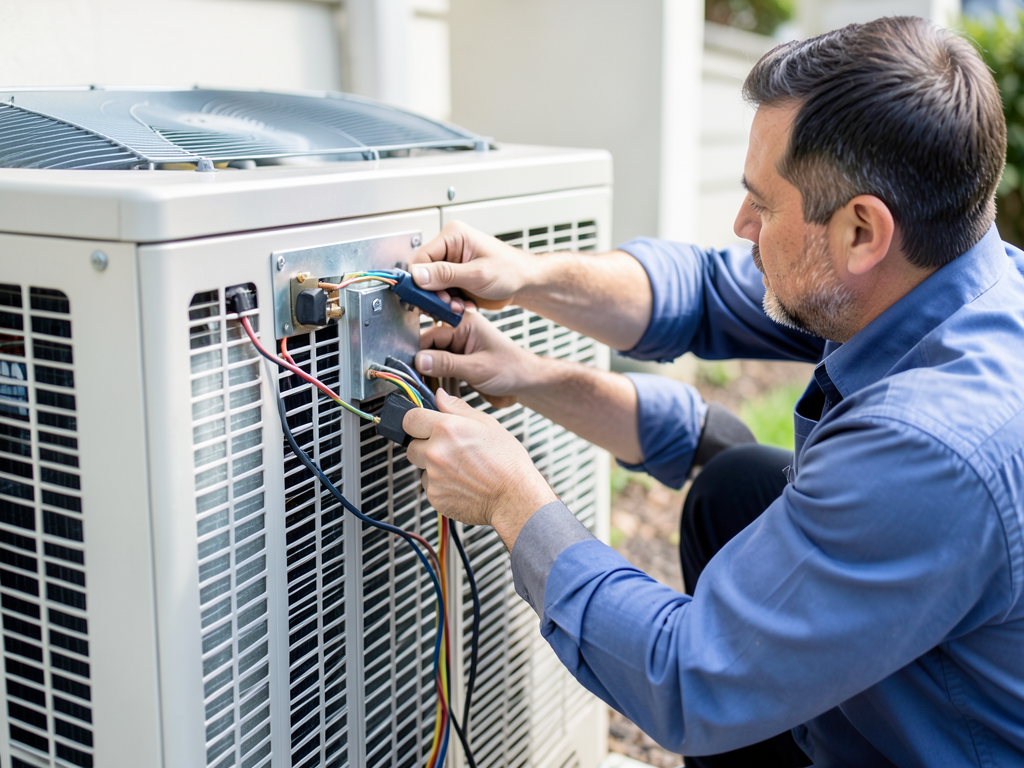
The soft starter mounts near the outdoor condenser unit, typically on the wall or a dedicated pad. It connects to the compressor’s run and start terminals, replacing or supplementing the existing capacitor. Proper wiring is critical – incorrect connections can damage both the soft starter and compressor.
Safety requirements include proper grounding, surge protection, and weatherproofing for the outdoor installation. The National Electrical Code (NEC Article 440) governs HVAC equipment installations, requiring specific wire sizes, overcurrent protection, and disconnect methods. National Electrical Code Article 440.
After installation, the system requires calibration to match your specific compressor characteristics. This involves measuring current draw during startup and adjusting the ramp rate for optimal performance. Most modern soft starters include automatic calibration that learns your compressor’s behavior over several startup cycles.
Cost Analysis and Return on Investment
Soft starter installation typically costs $400-800 for residential units, depending on compressor size and installation complexity. This includes the device ($200-400), labor ($200-300), and any necessary wiring upgrades. High-end commercial units can cost $1,000-2,000. Reliable Commercial AC Repair and Maintenance for Businesses in Kenner.
The ROI calculation includes several factors. Generator savings are significant – a smaller generator saves $500-1,500 upfront and uses less fuel during operation. Compressor longevity improves by 20-30%, potentially saving $3,000-5,000 over the system’s life. Reduced electrical stress also prevents capacitor failures that cost $150-300 each.
During hurricane season, the ability to maintain cooling can prevent costly mold remediation ($2,000-10,000) and protect electronics from humidity damage ($500-2,000). For homes with medical equipment or elderly residents, the health benefits are invaluable.
Energy savings are modest – typically 5-10% during startup cycles – but the primary benefits are generator compatibility and equipment protection rather than utility bill reduction.
Top Soft Starter Brands for New Orleans Homes
Micro-Air EasyStart leads the residential market with models for 8,000-15,000 BTU units (EasyStart 364) and 15,000-50,000 BTU units (EasyStart 368). These units feature automatic calibration, surge protection, and compatibility with most compressor types. The 364 model works well for window units and mini-splits, while the 368 handles central AC systems. Micro-Air EasyStart.
SoftStartRV offers similar technology in a weather-resistant package designed for both RV and residential use. Their 50-amp model handles up to 3-ton units and includes marine-grade components that withstand our coastal humidity.
Dometic SmartStart provides OEM integration for specific AC brands, offering seamless compatibility but limited to certain models. These units often include additional features like remote monitoring and integration with smart home systems.
For commercial applications, ABB and Siemens offer industrial-grade soft starters with advanced diagnostics and communication capabilities. These units handle larger compressors and provide detailed performance data for maintenance planning.
Maintenance and Troubleshooting
Soft starters require minimal maintenance but benefit from annual inspection. Check for loose connections, corrosion on terminals, and proper mounting integrity. Clean the unit with compressed air to prevent dust buildup that can cause overheating.
Common issues include failure to start, which often indicates wiring problems or incompatible compressor types. Error codes on modern units help diagnose problems – most manufacturers provide troubleshooting guides specific to their models.
If your AC won’t start with the soft starter, verify that the generator provides sufficient running watts and that the soft starter is properly calibrated for your compressor. Some older compressors with mechanical relays may not work with certain soft starter models.
During extended outages, monitor the soft starter’s temperature. Most units include thermal protection that shuts down the system if overheating occurs. Ensure adequate ventilation around the outdoor unit, especially if it’s enclosed in a protective housing.
Frequently Asked Questions
Will a soft starter void my AC warranty?
Most manufacturers allow soft starters as long as they’re properly installed by a licensed technician. However, modifying the electrical system could potentially affect warranty coverage. Check your specific warranty terms or consult with your HVAC contractor before installation.
Can I install a soft starter myself?
DIY installation is not recommended due to the high-voltage electrical work involved and the need for proper calibration. Incorrect installation can damage your compressor, create fire hazards, or void warranties. Always use a licensed HVAC technician familiar with soft starter technology.
How long do soft starters last?
Quality soft starters typically last 10-15 years with proper installation and maintenance. The solid-state components are highly reliable, but extreme heat, humidity, or power surges can reduce lifespan. Most units include diagnostic features that alert you to potential failures before complete breakdown occurs.
Will a soft starter help with power company surges?
Yes, soft starters can help protect against voltage fluctuations common with Entergy’s grid. The controlled voltage ramp-up reduces stress from minor surges, and many units include surge protection that safeguards both the compressor and the soft starter itself from larger spikes.
Do I need a permit to install a soft starter?
Permit requirements vary by parish in the New Orleans area. Orleans Parish typically requires an electrical permit for any modifications to HVAC electrical systems. Your licensed HVAC contractor should handle permitting as part of the installation process.
Getting Your Soft Starter Installed
Professional installation ensures your soft starter works correctly with your specific AC system and generator setup. A qualified technician will verify compatibility, perform proper wiring, and calibrate the unit for optimal performance. They’ll also ensure the installation meets all local electrical codes and manufacturer specifications.
Before scheduling installation, gather information about your AC unit (tonnage, age, brand) and your generator (wattage, type). This helps the technician select the appropriate soft starter model and plan the installation efficiently.
Most installations can be completed within a week, but scheduling during hurricane season may require longer lead times. Consider installing during the off-season to ensure you’re prepared before the next major storm threatens our area.
Call (504) 355-2955 today to schedule your soft starter installation and ensure your AC can run on your portable generator when the next storm hits. Don’t wait until the power goes out – preparation is the key to staying comfortable during New Orleans’ hurricane season.
Pick up the phone and call (504) 355-2955 before the next storm hits. Our licensed technicians understand the unique challenges of keeping New Orleans homes cool during extended power outages, and we’ll ensure your system is ready when you need it most.
{
“@context”: “https://schema.org”,
“@type”: “BlogPosting”,
“headline”: “How to Use a Soft Starter to Run Your AC on a Portable Generator”,
“description”: “Learn how to run your AC on a portable generator during New Orleans power outages using a soft starter. Reduce startup current by 60-70% and protect your compressor.”,
“wordCount”: 1713,
“datePublished”: “2026-04-27T09:32:00.000Z”,
“dateModified”: “2026-04-27T09:32:00.000Z”,
“inLanguage”: “en-US”,
“mainEntityOfPage”: {
“@type”: “WebPage”,
“@id”: “https://pioneerhvacneworleans.com”
},
“publisher”: {
“@type”: “LocalBusiness”,
“name”: “Pioneer HVAC New Orleans”,
“url”: “https://pioneerhvacneworleans.com”
},
“author”: {
“@type”: “Organization”,
“name”: “Pioneer HVAC New Orleans”,
“url”: “https://pioneerhvacneworleans.com”
},
“image”: {
“@type”: “ImageObject”,
“url”: “https://pioneerhvacneworleans.com/wp-content/uploads/2026/03/how-to-use-a-soft-starter-to-run-your-ac-on-a-port-1.png”
}
}
{
“@context”: “https://schema.org”,
“@type”: “HVACBusiness”,
“name”: “Pioneer HVAC New Orleans”,
“url”: “https://pioneerhvacneworleans.com”,
“address”: {
“@type”: “PostalAddress”,
“addressLocality”: “New Orleans”
},
“areaServed”: {
“@type”: “City”,
“name”: “New Orleans”
}
}
{
“@context”: “https://schema.org”,
“@type”: “FAQPage”,
“mainEntity”: [
{
“@type”: “Question”,
“name”: “Will a soft starter void my AC warranty?”,
“acceptedAnswer”: {
“@type”: “Answer”,
“text”: “Most manufacturers allow soft starters as long as they’re properly installed by a licensed technician. However, modifying the electrical system could potentially affect warranty coverage. Check your specific warranty terms or consult with your HVAC contractor before installation.”
}
},
{
“@type”: “Question”,
“name”: “Can I install a soft starter myself?”,
“acceptedAnswer”: {
“@type”: “Answer”,
“text”: “DIY installation is not recommended due to the high-voltage electrical work involved and the need for proper calibration. Incorrect installation can damage your compressor, create fire hazards, or void warranties. Always use a licensed HVAC technician familiar with soft starter technology.”
}
},
{
“@type”: “Question”,
“name”: “How long do soft starters last?”,
“acceptedAnswer”: {
“@type”: “Answer”,
“text”: “Quality soft starters typically last 10-15 years with proper installation and maintenance. The solid-state components are highly reliable, but extreme heat, humidity, or power surges can reduce lifespan. Most units include diagnostic features that alert you to potential failures before complete breakdown occurs.”
}
},
{
“@type”: “Question”,
“name”: “Will a soft starter help with power company surges?”,
“acceptedAnswer”: {
“@type”: “Answer”,
“text”: “Yes, soft starters can help protect against voltage fluctuations common with Entergy’s grid. The controlled voltage ramp-up reduces stress from minor surges, and many units include surge protection that safeguards both the compressor and the soft starter itself from larger spikes.”
}
}
]
}
{
“@context”: “https://schema.org”,
“@type”: “BreadcrumbList”,
“itemListElement”: [
{
“@type”: “ListItem”,
“position”: 1,
“name”: “Home”,
“item”: “https://pioneerhvacneworleans.com”
},
{
“@type”: “ListItem”,
“position”: 2,
“name”: “Blog”,
“item”: “https://pioneerhvacneworleans.com/blog”
},
{
“@type”: “ListItem”,
“position”: 3,
“name”: “How to Use a Soft Starter to Run Your AC on a Portable Generator”
}
]
}
{
“@context”: “https://schema.org”,
“@type”: “Service”,
“serviceType”: “HVAC”,
“provider”: {
“@type”: “LocalBusiness”,
“name”: “Pioneer HVAC New Orleans”,
“url”: “https://pioneerhvacneworleans.com”
},
“areaServed”: {
“@type”: “City”,
“name”: “New Orleans”
},
“description”: “Learn how to run your AC on a portable generator during New Orleans power outages using a soft starter. Reduce startup current by 60-70% and protect your compressor.”
}