
5 Signs Your AC Capacitor is About to Fail (Before the Next Heat Wave Hits)
Living in New Orleans means your air conditioner works overtime for nearly nine months of the year. When temperatures climb above 90 degrees with 90% humidity, your AC capacitor becomes the most stressed component in your system. This small but critical part stores electrical energy to start your compressor and keep your fan running. When it begins to fail, you’ll notice specific warning signs before your system completely shuts down. Get Your New Orleans AC Running Again with Our 24-Hour Emergency Repair Service.
The good news is that most capacitor failures happen gradually. You can spot the early warning signs and call for service before you’re stuck in a 100-degree house. Here are the five most common indicators that your AC capacitor needs immediate attention. Why Your Lakeview Home Needs a High-Efficiency AC Unit to Combat Swampy Humidity.
The Checklist: How to Tell if Your AC Capacitor is Blown
Capacitors don’t usually fail without warning. They give you several chances to catch the problem before your AC stops working completely. These five symptoms are your early warning system.
The ‘Humming’ Sound: The Motor Tries to Start But Can’t
When you hear a distinct humming noise coming from your outdoor condenser unit but the fan isn’t spinning, your capacitor is likely failing. The motor is trying to start but doesn’t have enough stored energy to get moving. This creates a humming sound as the motor struggles against its own resistance.
Listen for this sound when your AC first turns on. If you hear humming for more than 5-10 seconds before the system shuts off, your capacitor is probably on its last legs. This is especially common in older units that have been running non-stop through multiple New Orleans summers. Fighting New Orleans Humidity with a Professional Whole-Home Dehumidifier Installation.
AC Takes a Long Time to Start: Delayed Cooling Cycles
A healthy AC system should start cooling within 30 seconds of the thermostat calling for cold air. If you notice your system takes 2-3 minutes to begin cooling or seems to struggle before finally starting, your run capacitor is likely degrading.
This delay happens because the capacitor can no longer store and release energy quickly enough to meet the motor’s demands. The motor has to work harder to overcome the initial resistance, causing longer start times and increased wear on other components.
The Fan Won’t Spin: But the Unit Is Receiving Power
When the outdoor fan stops spinning but you can hear the compressor running, your capacitor has likely failed completely. The fan motor needs the capacitor to provide the initial boost of energy to overcome inertia and start spinning.
You can test this by turning on your AC and checking if the fan blade moves. If the blade is completely stationary but the unit sounds like it’s running, your capacitor has failed and needs immediate replacement. Continuing to run the system in this condition can damage your compressor.. Read more about How to Check if Your New Orleans AC Parts are Still Under Manufacturer Warranty.
Visual Signs: Bulging, Leaking, or ‘Popped’ Tops
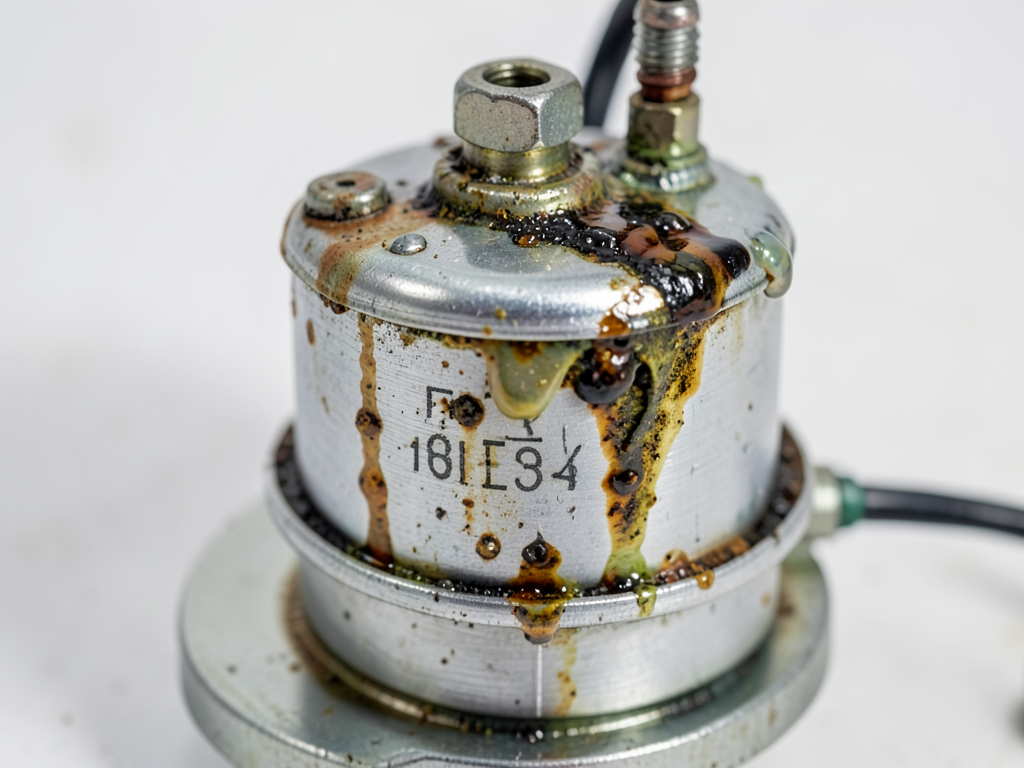
Capacitors often show physical signs of failure before they stop working completely. Look for these visual indicators on the cylindrical component mounted on your outdoor unit’s electrical panel.
A bulging top means the internal pressure has increased due to electrolyte breakdown. Leaking oil or a crystalline substance indicates the dielectric material is failing. A capacitor with a popped top has already failed catastrophically. These visual signs mean your capacitor is on borrowed time.
Rising Energy Bills: The Compressor Works Harder to Turn On
When your capacitor starts failing, your compressor has to draw more current to start the cooling cycle. This increased electrical draw shows up as higher energy bills, especially during peak summer months.
If you notice your July or August electric bill is 20-30% higher than normal without any change in usage patterns, your AC system might be working harder than it should. A failing capacitor forces your compressor to draw excess power just to start, wasting electricity and shortening the life of your entire system.
Why New Orleans Climate Kills AC Capacitors
The combination of extreme heat, high humidity, and salt air creates the perfect storm for capacitor failure in New Orleans. Our climate puts unique stress on these electrical components that you won’t find in other parts of the country.
New Orleans experiences temperatures above 95 degrees for weeks at a time during summer. This constant heat exposure causes the electrolyte inside capacitors to expand and contract repeatedly, eventually breaking down the internal structure. The Louisiana heat index often exceeds 100 degrees, pushing capacitors beyond their designed operating temperatures.
Our high humidity levels, frequently above 90%, accelerate corrosion on capacitor terminals and electrical connections. Salt air from Lake Pontchartrain and the Gulf of Mexico penetrates electrical panels, causing oxidation that increases resistance and heat generation. This combination of factors means capacitors in New Orleans typically last only 5-7 years instead of the 10-12 years you might see in cooler, drier climates.
The extended cooling season in Southeast Louisiana also means your AC runs almost year-round. While most of the country only uses air conditioning for 4-5 months, New Orleans residents run their systems from March through November. This 8-9 month runtime means capacitors experience 60-70% more operational hours than in other regions, dramatically reducing their lifespan.
Can You Replace an AC Capacitor Yourself?
Replacing a capacitor might seem like a simple DIY project, but it involves serious safety risks that most homeowners don’t realize. Capacitors store electrical energy even when the power is disconnected, and they can deliver a dangerous shock if not handled properly.
The voltage stored in an AC capacitor can be 400 volts or higher, enough to cause serious injury or death. Even after disconnecting power, a capacitor can hold a lethal charge for several minutes. Professional technicians use insulated tools and follow specific discharge procedures to work safely with these components.
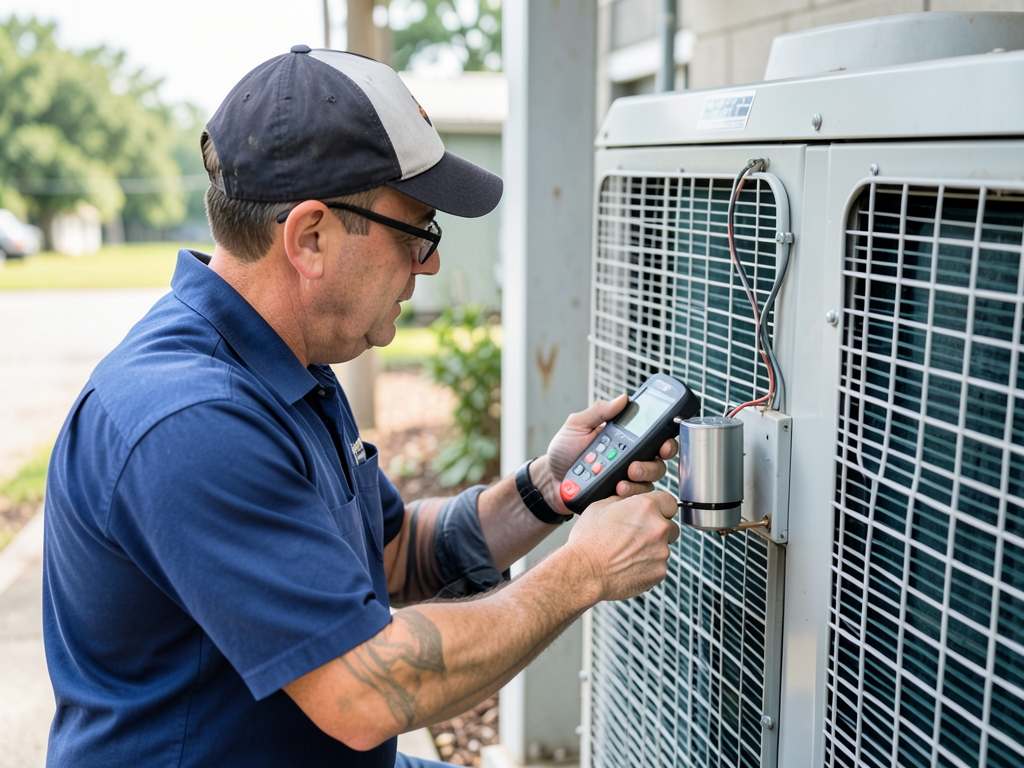
If you’re determined to check your capacitor yourself, you’ll need a multimeter that can measure capacitance in microfarads (µF). First, turn off power to your AC unit at the breaker. Remove the access panel on your outdoor condenser unit. Locate the capacitor – it’s usually a cylindrical component with multiple terminals.
Discharge the capacitor using an insulated screwdriver with a rubber handle. Touch the metal shaft to both terminals simultaneously to safely discharge any stored energy. Then use your multimeter to measure the capacitance. Compare the reading to the rating printed on the capacitor’s label. If the actual reading is more than 10% below the rated value, replacement is necessary.
However, the safest approach is to call a licensed HVAC technician. They have the proper tools, safety equipment, and diagnostic equipment to test capacitors accurately. They can also check related components like contactors and relays that might be contributing to your AC problems.
AC Capacitor Replacement Cost in New Orleans
Capacitor replacement costs in New Orleans vary based on several factors, but you can expect to pay between $150 and $350 for parts and labor. The capacitor itself typically costs $20 to $80, with the rest being labor and service call fees.
Standard run capacitors for typical residential systems range from $25 to $50. Dual-run capacitors that serve both the compressor and fan motor cost slightly more, usually $40 to $80. Hard start capacitors, which help older compressors start more easily in our extreme heat, can cost $60 to $120.
Labor costs in New Orleans average $75 to $125 per hour, with most capacitor replacements taking 30-60 minutes. Emergency service calls during heat waves might cost 50-100% more due to high demand. Some companies offer flat-rate pricing that includes the service call, making costs more predictable. Emergency Ductwork Repair.
Older homes in neighborhoods like Mid-City or the Garden District might have higher costs due to difficult access or the need for specialized capacitors for vintage systems. Modern high-efficiency units might require specific capacitor ratings that are more expensive but ensure optimal performance.
Consider the age of your system when deciding whether to repair or replace. If your AC unit is over 12 years old and the capacitor has failed, other components might be nearing the end of their lifespan too. A complete system replacement might be more cost-effective than multiple component repairs over the next few years. EPA.
Frequently Asked Questions
How long do AC capacitors typically last in New Orleans?
Most AC capacitors in New Orleans last 5-7 years due to our extreme heat and humidity. In cooler, drier climates, they might last 10-12 years. The constant operation during our long cooling season and the corrosive salt air significantly reduce their lifespan.
Can a bad capacitor damage other AC components?
Yes, a failing capacitor can cause serious damage to your compressor and fan motor. When the capacitor can’t provide enough starting power, the motor draws excessive current, overheats, and can burn out completely. This is why prompt replacement is crucial.
What’s the difference between a start capacitor and a run capacitor?
A start capacitor provides the initial burst of energy to start the motor, while a run capacitor stays in the circuit to help maintain consistent motor operation. Most modern AC units use a single dual-run capacitor that serves both functions, simplifying the electrical system.
Should I replace my capacitor preventively?
If your AC is over 5 years old and you haven’t had the capacitor checked, preventive replacement might be wise before summer heat waves hit. This is especially true if you notice any of the warning signs mentioned above or if your system runs constantly during our long cooling season.
How can I prevent capacitor failures?
Regular maintenance is your best prevention strategy. Have your AC serviced annually before cooling season begins. Keep the outdoor unit clean and free of debris. Consider installing a hard start kit if you have an older system, as this reduces the stress on your capacitor during startup.
Don’t wait until your AC completely fails during the next heat wave. If you’re experiencing any of these warning signs, call (504) 355-2955 today to schedule your inspection. Our licensed technicians can diagnose your capacitor issues and get your system running reliably before the next 100-degree day hits.
Pick up the phone and call (504) 355-2955 before the next storm hits. We offer same-day service throughout New Orleans, Metairie, and the surrounding areas. Your comfort and safety during our brutal summers depend on a properly functioning AC system. For more information, visit International Association of Certified Home Inspectors.
{
“@context”: “https://schema.org”,
“@type”: “BlogPosting”,
“headline”: “5 Signs Your AC Capacitor is About to Fail (Before the Next Heat Wave Hits)”,
“description”: “Don’t wait for a breakdown. Learn the 5 warning signs your AC capacitor is failing and how New Orleans’ heat and humidity make these failures more common.”,
“wordCount”: 1757,
“datePublished”: “2026-04-09T12:40:00.000Z”,
“dateModified”: “2026-04-09T12:40:00.000Z”,
“inLanguage”: “en-US”,
“mainEntityOfPage”: {
“@type”: “WebPage”,
“@id”: “https://pioneerhvacneworleans.com”
},
“publisher”: {
“@type”: “LocalBusiness”,
“name”: “Pioneer HVAC New Orleans”,
“url”: “https://pioneerhvacneworleans.com”
},
“author”: {
“@type”: “Organization”,
“name”: “Pioneer HVAC New Orleans”,
“url”: “https://pioneerhvacneworleans.com”
},
“image”: {
“@type”: “ImageObject”,
“url”: “https://pioneerhvacneworleans.com/wp-content/uploads/2026/03/5-signs-your-ac-capacitor-is-about-to-fail-before-1.png”
}
}
{
“@context”: “https://schema.org”,
“@type”: “HVACBusiness”,
“name”: “Pioneer HVAC New Orleans”,
“url”: “https://pioneerhvacneworleans.com”,
“address”: {
“@type”: “PostalAddress”,
“addressLocality”: “New Orleans”
},
“areaServed”: {
“@type”: “City”,
“name”: “New Orleans”
}
}
{
“@context”: “https://schema.org”,
“@type”: “FAQPage”,
“mainEntity”: [
{
“@type”: “Question”,
“name”: “Can You Replace an AC Capacitor Yourself?”,
“acceptedAnswer”: {
“@type”: “Answer”,
“text”: “Replacing a capacitor might seem like a simple DIY project, but it involves serious safety risks that most homeowners don’t realize. Capacitors store electrical energy even when the power is disconnected, and they can deliver a dangerous shock if not handled properly.”
}
},
{
“@type”: “Question”,
“name”: “How long do AC capacitors typically last in New Orleans?”,
“acceptedAnswer”: {
“@type”: “Answer”,
“text”: “Most AC capacitors in New Orleans last 5-7 years due to our extreme heat and humidity. In cooler, drier climates, they might last 10-12 years. The constant operation during our long cooling season and the corrosive salt air significantly reduce their lifespan.”
}
},
{
“@type”: “Question”,
“name”: “Can a bad capacitor damage other AC components?”,
“acceptedAnswer”: {
“@type”: “Answer”,
“text”: “Yes, a failing capacitor can cause serious damage to your compressor and fan motor. When the capacitor can’t provide enough starting power, the motor draws excessive current, overheats, and can burn out completely. This is why prompt replacement is crucial.”
}
},
{
“@type”: “Question”,
“name”: “What’s the difference between a start capacitor and a run capacitor?”,
“acceptedAnswer”: {
“@type”: “Answer”,
“text”: “A start capacitor provides the initial burst of energy to start the motor, while a run capacitor stays in the circuit to help maintain consistent motor operation. Most modern AC units use a single dual-run capacitor that serves both functions, simplifying the electrical system.”
}
},
{
“@type”: “Question”,
“name”: “Should I replace my capacitor preventively?”,
“acceptedAnswer”: {
“@type”: “Answer”,
“text”: “If your AC is over 5 years old and you haven’t had the capacitor checked, preventive replacement might be wise before summer heat waves hit. This is especially true if you notice any of the warning signs mentioned above or if your system runs constantly during our long cooling season.”
}
}
]
}
{
“@context”: “https://schema.org”,
“@type”: “BreadcrumbList”,
“itemListElement”: [
{
“@type”: “ListItem”,
“position”: 1,
“name”: “Home”,
“item”: “https://pioneerhvacneworleans.com”
},
{
“@type”: “ListItem”,
“position”: 2,
“name”: “Blog”,
“item”: “https://pioneerhvacneworleans.com/blog”
},
{
“@type”: “ListItem”,
“position”: 3,
“name”: “5 Signs Your AC Capacitor is About to Fail (Before the Next Heat Wave Hits)”
}
]
}
{
“@context”: “https://schema.org”,
“@type”: “Service”,
“serviceType”: “HVAC”,
“provider”: {
“@type”: “LocalBusiness”,
“name”: “Pioneer HVAC New Orleans”,
“url”: “https://pioneerhvacneworleans.com”
},
“areaServed”: {
“@type”: “City”,
“name”: “New Orleans”
},
“description”: “Don’t wait for a breakdown. Learn the 5 warning signs your AC capacitor is failing and how New Orleans’ heat and humidity make these failures more common.”
}