
Understanding SEER2 Ratings in New Orleans
New Orleans homeowners face unique cooling challenges. Our city’s extreme humidity, heat index that often exceeds 100°F, and corrosive salt air from Lake Pontchartrain create a perfect storm for AC systems. When the Department of Energy rolled out SEER2 standards in January 2023, it wasn’t just another regulatory change. It was a response to real-world climate conditions that New Orleans experiences for eight months of the year. Department of Energy air conditioning guide.
The shift from SEER to SEER2 represents a fundamental change in how we measure air conditioning efficiency. Traditional SEER testing assumed ideal conditions. SEER2 testing uses the M1 standard that accounts for external static pressure, which is critical in New Orleans where ductwork runs through crawl spaces and attics in historic shotgun homes. This new standard better reflects how your AC actually performs when battling our swampy humidity. Get Your New Orleans AC Running Again with Our 24-Hour Emergency Repair Service.
Under SEER2, the minimum efficiency requirement for residential split systems in the South region is 14.3 SEER2. That means any new AC installation in New Orleans must meet this standard. But here’s what matters: a 14.3 SEER2 unit in New Orleans doesn’t perform the same as one in Atlanta or Dallas. Our extended cooling season from March through November means your system runs nearly twice as long as systems in northern states. Fighting New Orleans Humidity with a Professional Whole-Home Dehumidifier Installation.
What are the Minimum SEER2 Requirements for Louisiana?
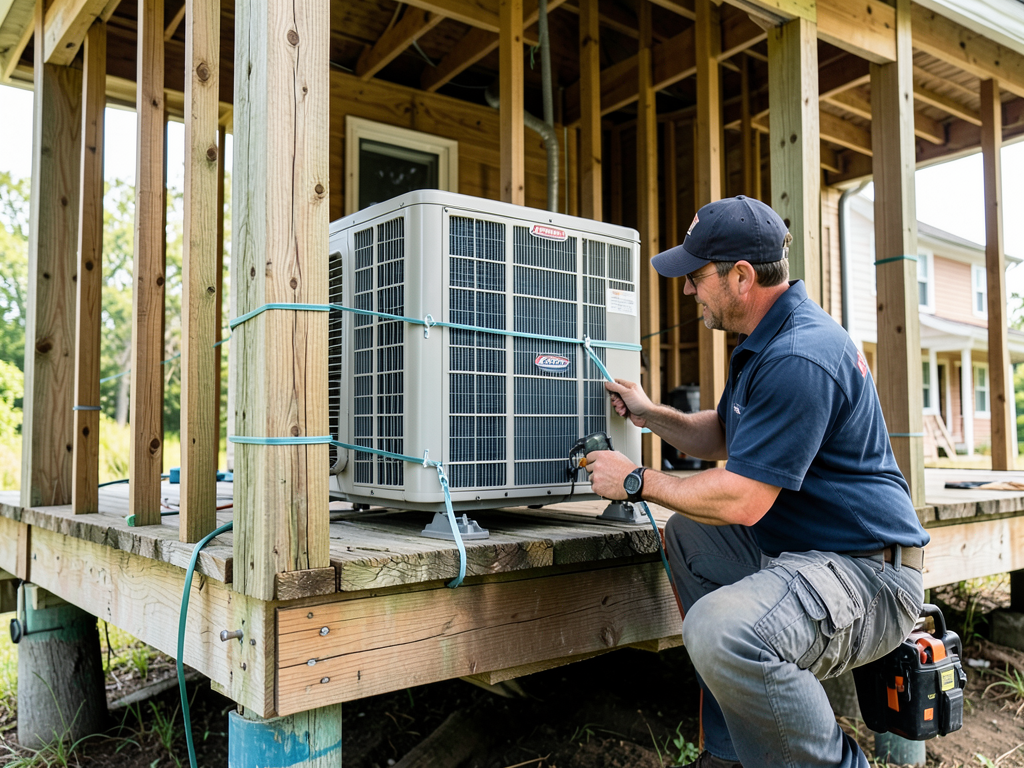
Louisiana falls under the DOE’s South region regulations, which have the strictest efficiency requirements in the country. For residential air conditioners under 45,000 BTU, the minimum is 14.3 SEER2. Heat pumps have similar requirements but must also meet specific heating season performance factors.
The 14.3 SEER2 minimum isn’t arbitrary. It represents the efficiency level where the energy savings offset the higher initial equipment cost over a typical 15-year system lifespan in our climate zone. For New Orleans specifically, this translates to roughly 30% better efficiency than the pre-2023 minimum standards. Energy Star certified air conditioners.
Contractors in New Orleans face inventory challenges with these new requirements. The “sell-through” rules mean we can’t install pre-2023 equipment even if we have it in stock. This has caused temporary price increases as the market adjusts to the new efficiency mandates and the more complex installation requirements that come with higher SEER2 ratings.
Commercial buildings have different requirements, typically starting at 15 SEER2, but residential homeowners need to understand that any replacement AC system installed after January 2023 must meet the 14.3 standard. There are no exceptions for historic homes or buildings in flood zones, though installation methods may vary based on FEMA elevation requirements. Reliable Commercial AC Repair and Maintenance for Businesses in Kenner.
Why SEER2 Matters for the New Orleans Climate
New Orleans humidity isn’t just uncomfortable—it’s a mechanical challenge that destroys AC systems. Our average relative humidity of 75% means your air conditioner runs constantly just to remove moisture from the air. Traditional SEER testing didn’t account for this latent heat load, but SEER2’s M1 standard does.
Here’s the diagnostic reality: when your AC struggles in July, it’s often not the compressor failing. It’s the evaporator coil freezing because the system can’t handle the moisture load. SEER2-rated units are designed with larger coils and better dehumidification capacity specifically for climates like ours. They can remove 20-30% more moisture per hour than older units with the same cooling capacity.
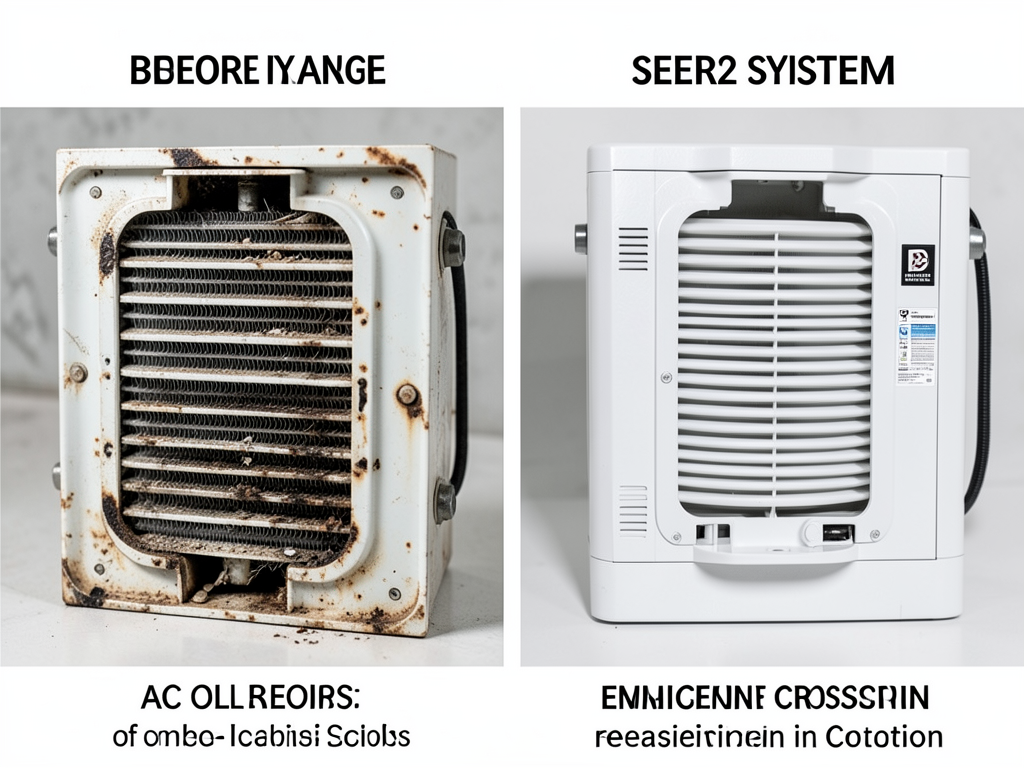
The corrosive salt air near Lake Pontchartrain accelerates coil degradation. SEER2 units use enhanced corrosion-resistant coatings that last 40% longer in our coastal environment. This matters because coil failure is the number one cause of AC replacement in New Orleans metro areas like Metairie and Kenner.
Our heat index frequently exceeds actual air temperature by 15-20 degrees. This means your AC works harder than the thermostat setting suggests. A 14.3 SEER2 unit might actually perform at 12-13 SEER under real New Orleans conditions, but that’s still significantly better than older units that could drop to 8-9 SEER when battling our humidity.
The extended cooling season also means more wear on electrical components. SEER2 systems include improved surge protection and more durable capacitors designed for the frequent power fluctuations common with Entergy’s grid during summer storms. This translates to fewer emergency repair calls during peak season. Emergency Ductwork Repair.
Cost vs. Long-Term Savings: A NOLA Perspective
The upfront cost difference between a basic 14.3 SEER2 unit and a premium 18+ SEER2 system typically ranges from $1,500 to $3,000. But here’s the local math that matters: Entergy New Orleans’ summer rates average $0.14 per kWh, and our cooling season runs 240 days per year.
| SEER2 Rating | Annual Cooling Cost | 5-Year Savings vs. 14.3 | 10-Year Savings |
|---|---|---|---|
| 14.3 (Minimum) | $1,850 | $0 | $0 |
| 16 SEER2 | $1,625 | $1,125 | $2,250 |
| 18 SEER2 | $1,445 | $2,025 | $4,050 |
These numbers assume a 3-ton system for a typical 2,000-square-foot New Orleans home. The key insight: even the minimum 14.3 SEER2 unit saves you about $400 annually compared to a 10-year-old 10 SEER system. That’s $4,000 over the life of the equipment, which often covers the price difference.
But efficiency isn’t just about electricity costs. Higher SEER2 units reduce humidity more effectively, which means you can set your thermostat 2-3 degrees higher while maintaining the same comfort level. This “feels like” savings can reduce your annual cooling costs by another 10-15% without changing your actual thermostat setting.
The Entergy Solutions program offers rebates up to $500 for qualifying high-efficiency AC installations. When combined with the federal 25C tax credit of 30% up to $600 for efficient systems, the effective cost premium for a 16+ SEER2 unit drops significantly. For many New Orleans homeowners, the payback period shrinks to 3-4 years instead of 5-7.
Consider the hidden costs of older units: frequent capacitor replacements ($200-300 each), refrigerant leaks ($400-600 each), and the inevitable compressor failure ($2,000-3,000). SEER2 units have improved component reliability that reduces these maintenance costs by 40-50% over their lifespan.
Local Rebates and Tax Credits
New Orleans residents have access to multiple incentive programs that make high-efficiency AC systems more affordable. The Entergy Solutions AC upgrade program offers rebates of $150 to $500 depending on the efficiency level and system size. These rebates are available for both heat pumps and central air conditioners meeting minimum efficiency standards.
The federal 25C tax credit under the Inflation Reduction Act provides 30% of the installation cost, up to $600, for qualifying high-efficiency HVAC equipment. This credit applies to both the equipment and installation labor, making it particularly valuable for comprehensive system replacements. The credit is available through 2032, but energy prices and equipment costs will likely increase, making sooner action more valuable.
Jefferson Parish and Orleans Parish occasionally offer additional property tax assessment freezes for energy-efficient home improvements, though these programs vary year to year. Check with your local tax assessor’s office for current availability. Some New Orleans neighborhoods, particularly those in historic districts, may qualify for additional preservation grants when replacing HVAC systems.
The Louisiana Department of Natural Resources also administers low-interest financing through the Energy Smart program for energy-efficient home improvements. These loans typically offer 5-7% interest rates with terms up to 10 years, making higher-efficiency systems more accessible without large upfront payments.
Utility companies outside New Orleans, like Cleco in surrounding parishes, offer similar rebate programs. If you’re in areas like Slidell or Mandeville, check with your specific provider. The key is that these incentives are time-limited and subject to budget availability, so planning your replacement during off-peak seasons can maximize your savings.
Professional installation through certified contractors is required to qualify for most rebates. This means choosing a contractor familiar with local building codes, Entergy’s requirements, and the specific installation techniques needed for New Orleans’ unique housing stock, from raised pier-and-beam foundations to historic shotgun homes with limited attic access.
What to Do Now with Your Current System
If your AC is over 10 years old and requires frequent repairs, the new SEER2 standards create a critical decision point. Here’s the diagnostic test: if your current system uses R-22 refrigerant or requires repairs costing more than 30% of a new system’s price, replacement makes financial sense even before considering efficiency gains.
For systems between 7-10 years old, the decision depends on performance. If your house feels humid even when the AC runs constantly, or if you’re seeing utility bills spike during mild weather, your system is likely losing efficiency. A professional load calculation can determine if your current system was properly sized—many New Orleans homes have oversized units that short-cycle, reducing efficiency and humidity control.
The “inventory sell-through” period for pre-2023 equipment ended in mid-2023, meaning all new installations must meet SEER2 standards. This creates urgency if you’ve been considering replacement but waiting for prices to drop. The reality is that SEER2 equipment costs have stabilized, and the efficiency gains are immediate.
For emergency situations where your system fails during peak summer, understand that you cannot install a less efficient replacement even if that’s all that’s available. This is why having a relationship with a local contractor who stocks SEER2 equipment and understands New Orleans’ specific requirements is crucial for avoiding extended downtime.
If you’re planning renovations or additions to your home, factor in the SEER2 requirements from the start. Adding square footage often means upsizing your AC, and the efficiency standards apply to the entire system, not just the new portion. Proper load calculations considering our humidity levels, solar gain from our intense sun, and the thermal properties of New Orleans’ typical building materials are essential.
The bottom line: SEER2 isn’t just a regulatory hurdle. It’s technology that’s better suited for New Orleans’ climate. The higher upfront cost is offset by lower utility bills, better humidity control, improved reliability in our harsh coastal environment, and available rebates that make the transition more affordable than ever.
Frequently Asked Questions
Do I have to replace my old AC immediately because of SEER2?
No. SEER2 only applies to new installations. If your current system works, you can keep it. However, when it needs replacement, the new unit must meet the 14.3 SEER2 minimum standard. Consider replacement if your system is over 10 years old, uses R-22 refrigerant, or requires frequent repairs. Why Your Lakeview Home Needs a High-Efficiency AC Unit to Combat Swampy Humidity.
How much can I really save with a higher SEER2 rating in New Orleans?
A 16 SEER2 unit typically saves $200-300 annually compared to the minimum 14.3 SEER2 in our climate. Over 15 years, that’s $3,000-4,500 in energy savings, plus better humidity control and fewer repairs. Entergy rebates and tax credits can reduce the initial cost premium significantly.
Will a higher SEER2 unit handle New Orleans humidity better?
Yes. SEER2 units are specifically designed with enhanced dehumidification for hot, humid climates. They remove 20-30% more moisture from the air than older units with similar cooling capacity. This means better comfort at higher thermostat settings and reduced mold/mildew risk in our humid environment.
Are there any exceptions to the SEER2 requirements for historic New Orleans homes?
No exceptions exist for efficiency standards, but installation methods can vary. Historic district homes may have specific mounting or aesthetic requirements. The key is working with contractors familiar with both SEER2 standards and New Orleans’ unique architectural challenges like limited attic access and raised foundations.
How do I qualify for Entergy rebates on a new AC system?
Work with a participating contractor who handles the rebate paperwork. The system must meet minimum efficiency requirements (14.3+ SEER2 for the rebate tier you want). Installation must be performed by a licensed professional, and you’ll need to provide proof of purchase and installation to Entergy for rebate processing.
- Assess Your Current System
Evaluate age, repair history, and performance. If over 10 years old or requiring frequent repairs, replacement may be more cost-effective than continued maintenance.
- Get a Professional Load Calculation
Don’t guess at sizing. A proper calculation considers our humidity, heat index, home orientation, and insulation levels specific to New Orleans construction methods.
- Compare SEER2 Options and Costs
Look beyond the minimum 14.3 rating. Calculate 5-year energy savings versus upfront cost premium. Factor in Entergy rebates and tax credits to determine true payback period.
- Choose the Right Contractor
Select a company experienced with SEER2 installations in New Orleans. They should understand local codes, Entergy requirements, and the specific challenges of our climate and housing stock.
Call (504) 355-2955 today to schedule your free SEER2 consultation and learn exactly how much you can save on your Entergy bills with a new high-efficiency system. Don’t wait until your old unit fails in July heat—plan your upgrade now and take advantage of current rebates before they change.
Pick up the phone and call (504) 355-2955 before the next storm hits. Our certified technicians understand New Orleans’ unique HVAC challenges and can recommend the perfect SEER2 system for your home’s specific needs. We’ll handle all rebate paperwork and ensure your new system meets every local requirement while maximizing your energy savings.
{
“@context”: “https://schema.org”,
“@type”: “BlogPosting”,
“headline”: “What the New SEER2 Ratings Actually Mean for Your New Orleans Utility Bills”,
“description”: “Discover how SEER2 standards impact your New Orleans AC costs, energy savings, and Entergy bills in 2026. Learn about local rebates, humidity challenges, and ROI.”,
“wordCount”: 2175,
“datePublished”: “2026-03-07T13:53:00.000Z”,
“dateModified”: “2026-03-07T13:53:00.000Z”,
“inLanguage”: “en-US”,
“mainEntityOfPage”: {
“@type”: “WebPage”,
“@id”: “https://pioneerhvacneworleans.com”
},
“publisher”: {
“@type”: “LocalBusiness”,
“name”: “Pioneer HVAC New Orleans”,
“url”: “https://pioneerhvacneworleans.com”
},
“author”: {
“@type”: “Organization”,
“name”: “Pioneer HVAC New Orleans”,
“url”: “https://pioneerhvacneworleans.com”
},
“image”: {
“@type”: “ImageObject”,
“url”: “https://pioneerhvacneworleans.com/wp-content/uploads/2026/03/what-the-new-seer2-ratings-actually-mean-for-your-1.png”
}
}
{
“@context”: “https://schema.org”,
“@type”: “HVACBusiness”,
“name”: “Pioneer HVAC New Orleans”,
“url”: “https://pioneerhvacneworleans.com”,
“address”: {
“@type”: “PostalAddress”,
“addressLocality”: “New Orleans”
},
“areaServed”: {
“@type”: “City”,
“name”: “New Orleans”
}
}
{
“@context”: “https://schema.org”,
“@type”: “FAQPage”,
“mainEntity”: [
{
“@type”: “Question”,
“name”: “What are the Minimum SEER2 Requirements for Louisiana?”,
“acceptedAnswer”: {
“@type”: “Answer”,
“text”: “Louisiana falls under the DOE’s South region regulations, which have the strictest efficiency requirements in the country. For residential air conditioners under 45,000 BTU, the minimum is 14.3 SEER2. Heat pumps have similar requirements but must also meet specific heating season performance factors.”
}
},
{
“@type”: “Question”,
“name”: “Do I have to replace my old AC immediately because of SEER2?”,
“acceptedAnswer”: {
“@type”: “Answer”,
“text”: “No. SEER2 only applies to new installations. If your current system works, you can keep it. However, when it needs replacement, the new unit must meet the 14.3 SEER2 minimum standard. Consider replacement if your system is over 10 years old, uses R-22 refrigerant, or requires frequent repairs. Why Your Lakeview Home Needs a High-Efficiency AC Unit to Combat Swampy Humidity.”
}
},
{
“@type”: “Question”,
“name”: “How much can I really save with a higher SEER2 rating in New Orleans?”,
“acceptedAnswer”: {
“@type”: “Answer”,
“text”: “A 16 SEER2 unit typically saves $200-300 annually compared to the minimum 14.3 SEER2 in our climate. Over 15 years, that’s $3,000-4,500 in energy savings, plus better humidity control and fewer repairs. Entergy rebates and tax credits can reduce the initial cost premium significantly.”
}
},
{
“@type”: “Question”,
“name”: “Will a higher SEER2 unit handle New Orleans humidity better?”,
“acceptedAnswer”: {
“@type”: “Answer”,
“text”: “Yes. SEER2 units are specifically designed with enhanced dehumidification for hot, humid climates. They remove 20-30% more moisture from the air than older units with similar cooling capacity. This means better comfort at higher thermostat settings and reduced mold/mildew risk in our humid environment.”
}
},
{
“@type”: “Question”,
“name”: “Are there any exceptions to the SEER2 requirements for historic New Orleans homes?”,
“acceptedAnswer”: {
“@type”: “Answer”,
“text”: “No exceptions exist for efficiency standards, but installation methods can vary. Historic district homes may have specific mounting or aesthetic requirements. The key is working with contractors familiar with both SEER2 standards and New Orleans’ unique architectural challenges like limited attic access and raised foundations.”
}
},
{
“@type”: “Question”,
“name”: “How do I qualify for Entergy rebates on a new AC system?”,
“acceptedAnswer”: {
“@type”: “Answer”,
“text”: “Work with a participating contractor who handles the rebate paperwork. The system must meet minimum efficiency requirements (14.3+ SEER2 for the rebate tier you want). Installation must be performed by a licensed professional, and you’ll need to provide proof of purchase and installation to Entergy for rebate processing.”
}
}
]
}
{
“@context”: “https://schema.org”,
“@type”: “HowTo”,
“name”: “How to Choose Your Next AC System”,
“step”: [
{
“@type”: “HowToStep”,
“position”: 1,
“name”: “Assess Your Current System”,
“text”: “Evaluate age, repair history, and performance. If over 10 years old or requiring frequent repairs, replacement may be more cost-effective than continued maintenance.”
},
{
“@type”: “HowToStep”,
“position”: 2,
“name”: “Get a Professional Load Calculation”,
“text”: “Don’t guess at sizing. A proper calculation considers our humidity, heat index, home orientation, and insulation levels specific to New Orleans construction methods.”
},
{
“@type”: “HowToStep”,
“position”: 3,
“name”: “Compare SEER2 Options and Costs”,
“text”: “Look beyond the minimum 14.3 rating. Calculate 5-year energy savings versus upfront cost premium. Factor in Entergy rebates and tax credits to determine true payback period.”
},
{
“@type”: “HowToStep”,
“position”: 4,
“name”: “Choose the Right Contractor”,
“text”: “Select a company experienced with SEER2 installations in New Orleans. They should understand local codes, Entergy requirements, and the specific challenges of our climate and housing stock.”
}
],
“image”: “https://pioneerhvacneworleans.com/wp-content/uploads/2026/03/what-the-new-seer2-ratings-actually-mean-for-your-1.png”
}
{
“@context”: “https://schema.org”,
“@type”: “BreadcrumbList”,
“itemListElement”: [
{
“@type”: “ListItem”,
“position”: 1,
“name”: “Home”,
“item”: “https://pioneerhvacneworleans.com”
},
{
“@type”: “ListItem”,
“position”: 2,
“name”: “Blog”,
“item”: “https://pioneerhvacneworleans.com/blog”
},
{
“@type”: “ListItem”,
“position”: 3,
“name”: “What the New SEER2 Ratings Actually Mean for Your New Orleans Utility Bills”
}
]
}
{
“@context”: “https://schema.org”,
“@type”: “Service”,
“serviceType”: “HVAC”,
“provider”: {
“@type”: “LocalBusiness”,
“name”: “Pioneer HVAC New Orleans”,
“url”: “https://pioneerhvacneworleans.com”
},
“areaServed”: {
“@type”: “City”,
“name”: “New Orleans”
},
“description”: “Discover how SEER2 standards impact your New Orleans AC costs, energy savings, and Entergy bills in 2026. Learn about local rebates, humidity challenges, and ROI.”
}