



menu

Gas Furnace Leak Repair in New Orleans | 24/7 Emergency Response Stops Dangerous Leaks Fast

When you smell gas or suspect a furnace leak, every second counts. Our emergency gas furnace leak repair teams arrive fast across New Orleans, isolate the danger, and restore safe heat to your home.

Slider Image 1
Slider Image 2
Slider Image 3
Slider Image 4
Slider Image 5
Slider Image 7
Slider Image 8
Slider Image 9
Slider Image 10
Slider Image 11

Why Gas Furnace Leaks Are a Critical Emergency in New Orleans Homes

You smell rotten eggs near your furnace. Your carbon monoxide detector is beeping. Your pilot light keeps going out. These are not minor issues. They are warning signs of a gas furnace leak, and in New Orleans homes, the stakes are high.

New Orleans sits in a high water table zone with chronic foundation settlement. As homes shift on soft deltaic soils, gas lines can stress, crack, or separate at connection points. Add in our humid subtropical climate, which accelerates corrosion on steel gas lines and older brass fittings, and you have a perfect storm for gas leaks in aging furnace systems.

A gas leak is not something you wait on. Natural gas is highly flammable. Even a small leak can fill your crawlspace or attic with explosive vapor. Carbon monoxide, the silent byproduct of incomplete combustion, can poison your family while they sleep. If you suspect a furnace gas line leak, you need to evacuate, shut off the gas at the meter if safe to do so, and call for emergency furnace gas leak service immediately.

We fix gas leaks in furnaces across New Orleans every week. We see cracked heat exchangers in older Carrier and Trane units. We repair gas leaks on furnace supply lines damaged by shifting foundations in Lakeview and Gentilly. We replace corroded gas valves and leaking manifold connections in Mid-City shotgun doubles. The repair gas leak on furnace calls we handle are not scheduled maintenance. They are life-safety emergencies, and we treat them that way.

Do not ignore the smell of gas. Do not wait until morning. Gas heater leak repair is a same-day, same-hour priority.

Why Gas Furnace Leaks Are a Critical Emergency in New Orleans Homes
How We Isolate and Repair Gas Furnace Leaks Safely

How We Isolate and Repair Gas Furnace Leaks Safely

We do not guess. We do not patch and hope. We follow a disciplined gas leak isolation protocol that prioritizes your safety, identifies the exact failure point, and delivers a code-compliant repair that lasts.

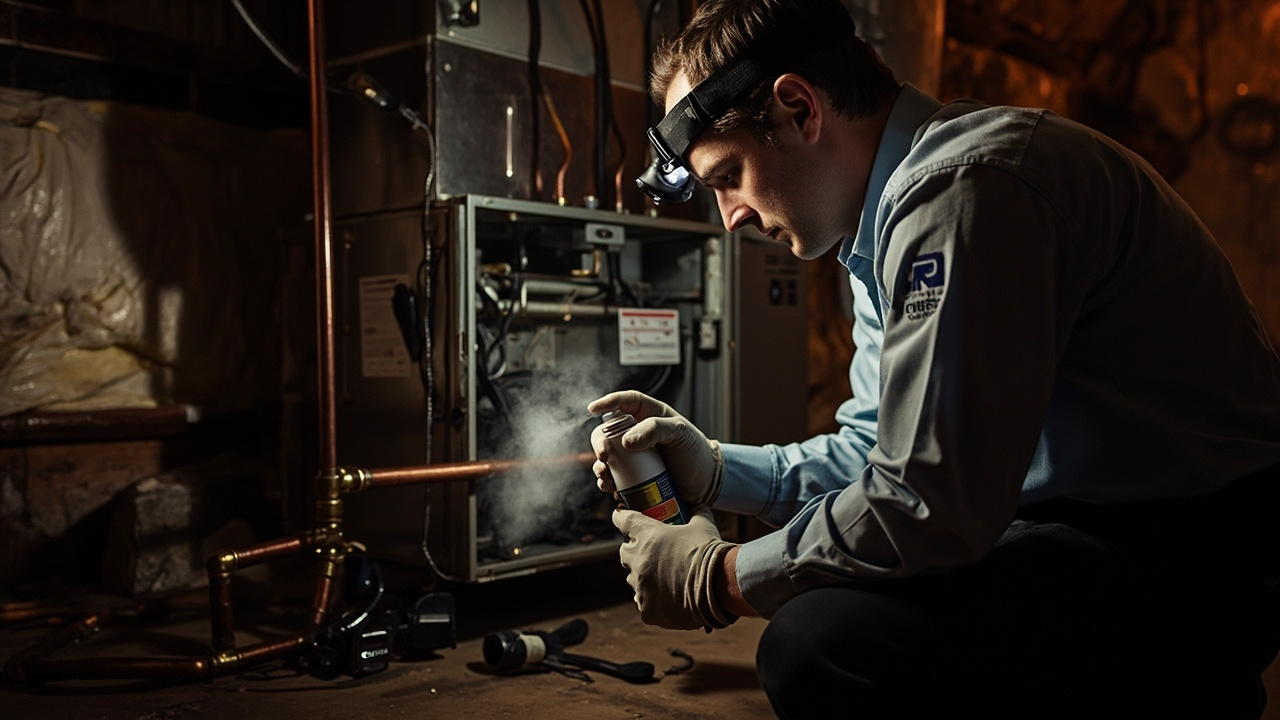
When you call for emergency furnace gas leak service, our technician arrives with a calibrated combustible gas detector, not just a spray bottle of soapy water. We measure gas concentration in parts per million to pinpoint the leak source, whether it is at the gas valve, the manifold, the burner orifice, the heat exchanger, or the supply line itself.

Once we locate the leak, we shut down the furnace, lock out the gas supply, and ventilate the area. If the leak is at a threaded connection or gas valve, we disassemble the joint, clean the threads, apply approved pipe dope or Teflon tape per manufacturer specs, and reassemble with a calibrated torque wrench. If the leak is in the heat exchanger, we do not patch it. A cracked heat exchanger is a carbon monoxide hazard and a furnace replacement decision, not a repair.

For gas line leaks caused by foundation movement, we replace the damaged section with black iron or CSST flexible gas line, depending on code and installation conditions. We pressure test the repair to 10 PSI for 15 minutes and verify zero drop. We then use an electronic leak detector and combustion analyzer to confirm safe operation before we leave.

This is not a YouTube DIY job. Gas work in New Orleans requires a licensed contractor who understands local building codes, proper venting in our humid climate, and how to handle gas safely in older homes with outdated wiring and ventilation.

What Happens During an Emergency Gas Furnace Leak Call

Gas Furnace Leak Repair in New Orleans | 24/7 Emergency Response Stops Dangerous Leaks Fast
01

Immediate Safety Assessment

We verify your home is safe to enter, check gas concentration levels with a digital detector, and isolate the furnace from the gas supply. If levels are dangerous, we ventilate the space and coordinate with the gas utility. Your safety is the first priority, not the repair. We do not rush into a hazardous environment without proper protocol.
02

Leak Detection and Diagnosis

Using electronic leak detection and pressure testing, we pinpoint the exact source of the gas leak. We inspect the gas valve, burner assembly, heat exchanger, manifold, and all connection points. We document the failure, explain what caused it, and walk you through the repair options. You get a clear diagnosis, not a sales pitch for a new furnace unless replacement is the only safe option.
03

Repair and Safety Verification

We complete the furnace gas line leak repair using code-compliant materials and methods. We pressure test the repair, verify combustion efficiency with a flue gas analyzer, and check for proper venting and carbon monoxide levels. Before we leave, you have a furnace that operates safely, and we give you a written record of what we found and what we fixed.

Why New Orleans Homeowners Trust Us for Gas Leak Emergencies

Gas leaks do not happen during business hours. They happen at midnight when the temperature drops and your furnace kicks on after months of sitting idle. They happen on Sundays when your family is home and the smell of gas sends everyone outside in a panic.

Pioneer HVAC New Orleans answers those calls. We run true 24/7 emergency dispatch, not an answering service that takes a message. When you call our emergency line, you reach a live person who can have a technician rolling to your home in Uptown, the Bywater, Algiers, or Metairie within the hour.

We know New Orleans housing stock. We work in century-old shotgun homes with original gas lines. We service post-Katrina rebuilds with modern HVAC systems. We handle Eastover mansions with zoned forced air and Garden District doubles with ancient floor furnaces. Every neighborhood in this city has unique challenges, and we have seen them all.

Our technicians are not apprentices learning on your dime. They are experienced HVAC professionals who carry the tools, parts, and diagnostic equipment to handle gas furnace leak repair on the first trip. We stock gas valves, manifold assemblies, and flex connectors on our trucks because we know what fails in this climate.

We also understand the local building code requirements. New Orleans operates under the Louisiana State Uniform Construction Code, which references NFPA 54 for fuel gas installations. We pull permits when required, we follow venting and combustion air rules for our humid climate, and we document every repair for your homeowner insurance if you file a claim.

You are not hiring a handyman with a pipe wrench. You are hiring a licensed contractor who treats your home and your family's safety with the seriousness it deserves.

What to Expect When You Call for Gas Furnace Leak Repair

Fast Emergency Response Time

When you have a gas leak, you do not have time to wait for a callback or a next-day appointment. We dispatch a technician immediately, with the goal of arriving within 60 minutes for emergency gas furnace leak repair calls in Orleans Parish and the inner metro. If your home is unsafe to occupy, we prioritize your call over non-emergency service appointments. You get a real-time ETA when you call, not a four-hour window.

Thorough Gas Leak Inspection

We do not assume the first spot we find is the only leak. We inspect the entire gas train from the supply line to the burners. We check the heat exchanger for cracks, test the gas valve for proper shutoff, and inspect all threaded connections and flex lines. We use combustion analysis to verify your furnace is burning clean and not producing dangerous levels of carbon monoxide. You get a complete safety assessment, not a quick patch.

Code-Compliant Permanent Repair

We do not use tape, epoxy, or temporary fixes on gas lines. Every repair meets the National Fuel Gas Code and local building standards. We replace faulty components with manufacturer-approved parts. We pressure test every connection. We verify safe operation with calibrated instruments before we restore gas service to your furnace. You get a repair that passes inspection, not a band-aid that fails in six months.

Follow-Up Safety Check

After we repair the gas leak, we do not disappear. We provide written documentation of what we found, what we repaired, and what you need to monitor. If your furnace is old and showing other signs of wear, we give you honest guidance on whether continued repairs make sense or if replacement is the smarter long-term decision. We also offer annual safety inspections to catch small issues before they become dangerous gas leaks.

Frequently Asked Questions

You Have Questions,
We Have Answers

How much does it cost to fix a gas leak in a furnace? +

Gas furnace leak repair costs in New Orleans vary based on the leak source. A simple valve or fitting repair ranges from $150 to $350. Heat exchanger cracks are more serious and typically cost $1,200 to $3,500 to replace. Gas line repairs run $200 to $600. Many local HVAC companies offer free leak detection with repair. The high humidity in New Orleans can accelerate corrosion, making early detection critical. Emergency after-hours service costs more but protects your family immediately. Always get a written estimate before authorizing work. Never delay repair when you suspect a gas leak.

Can I fix a furnace leak myself? +

No. Never attempt to repair a gas furnace leak yourself. Natural gas is highly explosive and exposure causes carbon monoxide poisoning. Louisiana requires licensed professionals to handle all gas line work. You lack the proper tools to detect leaks, test pressure, and verify safe operation. One spark from a metal tool can ignite gas. Even small leaks can accumulate in enclosed spaces common in New Orleans homes. Your only safe action is shutting off the gas supply at the meter, opening windows, evacuating everyone, and calling a licensed HVAC technician immediately. Your safety depends on professional expertise.

Who do you call if your furnace is leaking? +

Call a licensed HVAC technician immediately when your furnace is leaking. If you smell gas or suspect a serious leak, call 911 and Entergy New Orleans first, then evacuate. Do not use your phone inside the house. Once safe, contact a 24/7 emergency HVAC company serving the New Orleans metro. They have gas detection equipment and can diagnose whether you have a gas leak, condensate leak, or other issue. Many local companies offer emergency response within hours. Keep your HVAC company's number saved. Fast response prevents explosion risk and carbon monoxide exposure.

What is the most expensive part to fix on a furnace? +

The heat exchanger is the most expensive furnace component to replace, typically costing $1,500 to $4,000 in New Orleans. This metal chamber transfers heat from combustion gases to your air supply. Cracks develop from thermal stress and corrosion, worsened by our humid climate. When cracked, carbon monoxide and combustion gases leak into your home. The repair requires extensive labor, disassembly, and sometimes matching parts for older units. If your furnace is over 15 years old, replacement often makes more financial sense than heat exchanger repair. A qualified technician will assess both options.

Do homeowners insurance cover gas leaks? +

Homeowners insurance typically covers sudden gas leak damage but not the leak repair itself. Policies may cover fire damage, explosion damage, or related property loss from a gas leak. They rarely cover gradual deterioration, maintenance issues, or furnace component failures. Review your specific policy or call your agent immediately after securing your home. Document all damage with photos. In New Orleans, some policies exclude certain types of water or mold damage that can result from furnace leaks. Always file claims promptly. Insurance will not cover neglected maintenance or deferred repairs.

What is the $5000 rule for HVAC? +

The $5,000 rule is a guideline for furnace replacement decisions. Multiply the repair cost by your furnace's age. If the total exceeds $5,000, replace rather than repair. For example, a $500 repair on a 12-year-old furnace equals $6,000, suggesting replacement makes better financial sense. This rule accounts for efficiency gains, reliability concerns, and future repair likelihood. In New Orleans, high humidity and cooling loads mean older furnaces work harder. Modern units offer better energy efficiency, which cuts your Entergy bills. A qualified technician will help you evaluate repair versus replacement economics.

Does homeowners insurance cover furnace leaks? +

Homeowners insurance coverage depends on the leak type. Water leaks from condensate drain clogs or damaged drain pans typically are not covered as they result from normal wear or maintenance neglect. Sudden catastrophic leaks causing property damage may qualify for coverage. Gas leaks themselves are not covered, but resulting fire or explosion damage usually is. Review your policy's specific exclusions. New Orleans homes face high humidity, which accelerates furnace corrosion and condensate issues. Most insurance companies expect proper maintenance. Always document damage immediately and contact your agent before making repairs to preserve claim eligibility.

Can you stay in a house with a small gas leak? +

No. Evacuate immediately if you smell gas. Even small leaks create explosion and poisoning risks. Natural gas displaces oxygen in enclosed rooms. Carbon monoxide from incomplete combustion is odorless and deadly. New Orleans homes often have poor ventilation and lower ceilings, allowing gas to concentrate faster. Do not turn lights on or off, use phones, or create any spark. Open windows only if you can do so safely without using switches. Evacuate everyone including pets. Call 911 and your gas company from outside. Wait for professional clearance before re-entering. Your life is not worth the risk.

What is the most common furnace failure? +

Ignition system failure is the most common furnace problem. The pilot light, flame sensor, or electronic igniter prevents the burner from lighting. In New Orleans, high humidity causes sensor corrosion and electrical component failures. Dirty flame sensors misread combustion and shut down your system. These repairs are usually straightforward and inexpensive. Other common failures include thermostat malfunctions, clogged air filters, and blower motor issues. Regular maintenance prevents most failures. Annual inspections catch problems before they become emergencies. If your furnace cycles on and off repeatedly or will not ignite, call a technician immediately.

Is a gas leak call out free? +

Most New Orleans HVAC companies offer free gas leak detection when you commit to the repair. Emergency service calls typically include a trip charge of $75 to $150, which may be waived with repair. If you have a life-threatening emergency with strong gas odor, call Entergy New Orleans or 911 first. They respond free of charge to secure your home. For suspected minor leaks or furnace malfunctions, expect a diagnostic fee that covers technician time and equipment use. Many companies offer 24/7 emergency response. Always ask about fees upfront. Your safety justifies the investment in professional detection.

How New Orleans Foundation Settlement Causes Gas Furnace Leaks

New Orleans sits on Mississippi River deltaic deposits, clay, silt, and organic soils that compress and shift over time. As your home settles, rigid black iron gas lines experience stress at joints and fittings. This is why we see gas leaks at furnace connections in older Gentilly and Lakeview homes that have experienced differential settlement. The gas line did not fail because of poor installation. It failed because the foundation moved and the gas line could not flex with it. When we repair gas leaks on furnaces in New Orleans, we often recommend flexible connectors or stress-relief loops to prevent future failures.

Local contractors understand these soil conditions. We know which neighborhoods are built on fill, which areas have high water tables, and which homes are at risk for ongoing movement. This knowledge informs how we design gas line repairs that last. If you hire a contractor from out of town, they do not have this context. They patch the leak and move on. We fix the leak and address the underlying cause so you do not call us back in six months with the same problem in a different spot.

HVAC Services in The New Orleans Area

Pioneer HVAC New Orleans is proud to serve the entire New Orleans metropolitan area and surrounding parishes. Our central location allows our technicians to rapidly reach you, minimizing your wait time and ensuring quick service response for your heating and cooling needs. Invite us to your location by checking our service area map online or simply giving us a call today to confirm service availability at your specific address.

Address:
Pioneer HVAC New Orleans, 612 Andrew Higgins Dr, New Orleans, LA, 70130

Additional Services We Offer

Our news updates

Latest Articles & News from The Blogs

Expert High-Velocity HVAC Installation & Repair in New Orleans\n\nTraditional ductwork can destroy the character of historic New Orleans homes. High-velocity…

Why High-Velocity HVAC is the Secret to Cooling Historic Homes with No Closet Space

Expert High-Velocity HVAC Installation & Repair in New Orleans\n\nTraditional ductwork can destroy the character of historic New Orleans homes. High-velocity…

Why Magnolia Leaves and Crepe Myrtle Blooms are Secretly Killing Your Metairie AC Unit

Why Magnolia Leaves and Crepe Myrtle Blooms are Secretly Killing Your Metairie AC Unit Your Metairie air conditioner is under…

Keeping Parade Dust and Debris Out of Your Uptown Home HVAC System

Keeping Parade Dust and Debris Out of Your Uptown Home HVAC System Uptown New Orleans homes face unique challenges during…

Contact Us

Gas leaks are life-threatening emergencies. Evacuate your home, shut off the gas if you can do so safely, and call us immediately at (504) 355-2955. We dispatch 24/7 and treat every gas leak call as a priority.