Preparing Your Madisonville Boat House for the 2026 Hurricane Season
Living on the water in Madisonville means enjoying spectacular views of the Tchefuncte River and Lake Pontchartrain, but it also means facing unique challenges when hurricane season approaches. Your outdoor HVAC equipment sits vulnerable to storm surge, brackish water corrosion, and wind-borne debris. This guide walks you through exactly what you need to do to protect your investment before the next big storm hits.
The 2026 hurricane season forecast predicts above-average activity, making now the critical time to prepare. Unlike inland homes, waterfront properties in St. Tammany Parish face specific risks that require targeted solutions. From elevation requirements to electrical safety, we’ll cover everything you need to know to keep your system running after the storm passes. St. Tammany Parish Permitting Information.
Understanding Storm Surge Risks in Madisonville
Storm surge in Madisonville behaves differently than typical flooding. When hurricanes push water up the Tchefuncte River, the combination of freshwater and saltwater creates brackish conditions that accelerate corrosion on aluminum condenser fins and copper refrigerant lines. The surge also brings debris that can damage unprotected equipment.
According to FEMA flood maps, much of Madisonville’s waterfront falls in Zone AE, where Base Flood Elevation (BFE) ranges from 8 to 12 feet depending on your exact location. This means your outdoor unit needs elevation above these levels plus an additional safety margin. The corrosive nature of brackish water means even brief submersion can cause irreversible damage to electrical components and heat exchangers. FEMA Flood Map Service Center.
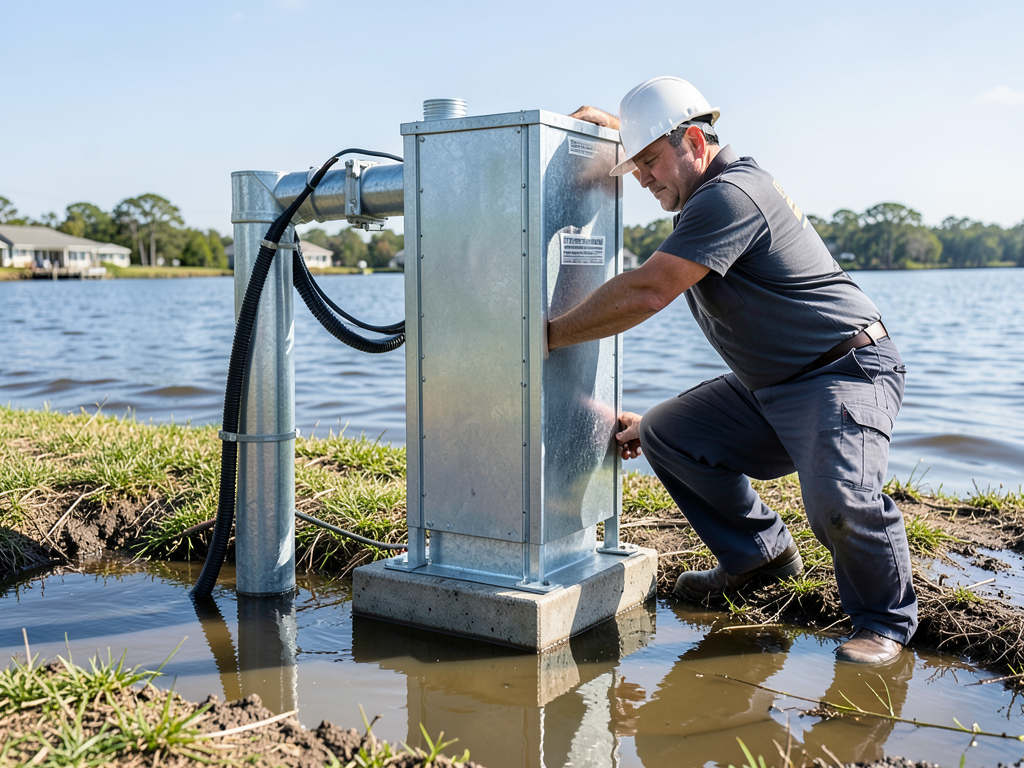
Diagram showing typical storm surge height versus HVAC unit elevation requirements for Madisonville waterfront properties.
Short-Term Emergency Prep: Pre-Storm Checklist
When a hurricane threatens, you have limited time to secure your outdoor HVAC equipment. Here’s what to do in the 24-48 hours before landfall:
- Cut Power at the Breaker
Locate your outdoor unit’s dedicated breaker in your main electrical panel. Switch it to the OFF position. This prevents electrical damage if water reaches the unit and eliminates the risk of electric shock during cleanup.
- Secure Loose Panels and Covers
Check for any loose access panels or protective covers. Use a screwdriver to tighten all screws. Loose panels become wind-borne debris that can damage windows or vehicles.
- Remove Debris from Around the Unit
Clear away any patio furniture, planters, or loose items within a 10-foot radius. These become projectiles in high winds that can dent condenser coils or break refrigerant lines.
- Document Current Condition
Take photos of your unit from multiple angles. This documentation helps with insurance claims if damage occurs and provides a baseline for post-storm assessment.
Never wrap your outdoor unit in plastic sheeting. While it seems protective, plastic creates a moisture trap that promotes rust and can cause more damage than leaving the unit exposed. Instead, focus on elevation and securing loose components.
Long-Term Solutions: Elevation and Securing Your Equipment
Proper elevation represents your best defense against storm surge damage. In Madisonville’s flood zones, HVAC equipment must sit at least 1 foot above the BFE, though many experts recommend 2 feet for added protection. This elevation requirement stems from Louisiana State Uniform Construction Code requirements for coastal areas. Expert Furnace Repair in Gretna to Keep Your Family Warm on Chilly Delta Nights.
Several elevation methods work for waterfront properties:
- Concrete Pads on Piers – Six-inch thick concrete pads supported by pressure-treated wood or steel piers can elevate units 2-4 feet above grade. Piers must extend below the frost line and be anchored to prevent shifting during high water.
- Cantilevered Wall Mounts – For homes with solid exterior walls, heavy-duty brackets can mount the condenser unit directly to the wall at heights of 5-8 feet. These require engineering calculations to ensure the wall can support the weight and wind loads.
- Equipment Stands – Commercial-grade HVAC stands made from galvanized steel or aluminum provide adjustable height options from 2-6 feet. Look for stands rated for 150+ mph wind loads.
The choice depends on your home’s construction, local soil conditions, and budget. Madisonville’s clay-rich soil requires proper footings to prevent settling, while the high water table means piers must extend below seasonal high water levels.
Local Codes and Permitting in St. Tammany Parish
St. Tammany Parish follows Louisiana State Uniform Construction Code with additional requirements for waterfront properties. When elevating HVAC equipment, you may need permits depending on the scope of work:
- Equipment Stands Under 6 Feet – May not require permits if they don’t alter the home’s structure. However, electrical disconnects must still meet National Electrical Code requirements.
- Elevated Platforms Over 30 Inches – Require building permits and must meet structural requirements for wind resistance and load capacity.
- Wall-Mounted Units – Require engineering calculations and building permits to ensure the mounting structure can handle wind loads up to 150 mph.
- Visual Inspection
Check for standing water around the unit, damaged panels, or displaced components. Look for signs of corrosion on electrical connections and refrigerant lines.
- Professional Cleaning
If the unit was submerged, even partially, professional cleaning is essential. Technicians use specialized coil cleaners and corrosion inhibitors to remove salt deposits and prevent accelerated deterioration.
- Electrical Testing
Before restoring power, have a licensed electrician test all electrical components. Water exposure can cause insulation breakdown that creates fire hazards when power is restored.
- Refrigerant Pressure Check
Corrosion can cause microscopic leaks in refrigerant lines. A pressure test identifies these issues before they cause system failure.
- Unusual noises coming from the unit after a storm
- Visible water inside electrical compartments
- Refrigerant leaks indicated by hissing sounds or oily residue
- Complete system failure when attempting to restart
- Pre-storm photos showing unit condition
- Elevation certificates and permits
- Professional inspection reports
- Maintenance records proving regular service
Post-2020 updates to local codes require all new HVAC installations in flood zones to include disconnect switches mounted at least 5 feet above grade. This prevents electrical hazards during flooding and meets both state and federal requirements.
Post-Flooding Recovery Steps
After a storm passes and flood waters recede, resist the urge to immediately turn your HVAC system back on. Even if the unit appears dry, internal components may have absorbed moisture or suffered corrosion damage.
Follow these steps for safe recovery:
Attempting to operate a water-damaged unit can cause catastrophic compressor failure, turning a repairable situation into a complete replacement need. The cost of professional inspection is minimal compared to replacing an entire system.
Cost Comparison: Elevation vs. Replacement
| Elevation Method | Average Cost Range | Expected Lifespan Extension | Permit Requirements |
|---|---|---|---|
| Equipment Stand (2-4 ft) | $800 – $1,500 | 5-7 years | May not require permit |
| Concrete Pad on Piers (4-6 ft) | $2,000 – $3,500 | 7-10 years | Building permit required |
| Cantilevered Wall Mount (6-8 ft) | $3,000 – $5,000 | 10+ years | Engineering + building permit |
| Complete System Replacement | $4,000 – $8,000 | N/A | Mechanical permit required |
Elevation costs vary based on unit size, required height, and local soil conditions. Madisonville’s high water table and clay soil often increase foundation costs compared to inland areas. However, the investment typically pays for itself by extending equipment life and preventing flood damage.
Emergency Response: When to Call for Help
Certain situations require immediate professional attention. Call (504) 355-2955 if you notice:
Quick response prevents minor issues from becoming major failures. Our technicians carry specialized equipment for post-flood diagnostics and can often restore operation the same day.
Insurance Considerations for Waterfront Properties
Standard homeowners insurance often excludes flood damage, making separate flood insurance essential for Madisonville residents. When filing claims for HVAC damage, documentation becomes critical.
Keep records of:
Insurance companies look for evidence that you took reasonable steps to protect your property. Proper elevation and documented preparation strengthen your claim position and can speed up approval processes.
Frequently Asked Questions
How high should I elevate my HVAC unit in Madisonville?
Elevate at least 1 foot above your property’s Base Flood Elevation (BFE), but 2 feet provides better protection. Check FEMA flood maps for your specific BFE, which ranges from 8-12 feet in most Madisonville waterfront areas.
Can I install a protective cover over my outdoor unit?
Avoid plastic covers as they trap moisture and promote rust. Instead, focus on proper elevation and securing loose components. Professional hurricane straps provide better protection than covers.
What happens if my unit gets submerged in brackish water?
Brackish water causes accelerated corrosion of electrical components and aluminum fins. Even brief submersion requires professional cleaning and inspection to prevent premature failure. Never attempt to operate a submerged unit.
Do I need permits to elevate my HVAC equipment?
Permits depend on the elevation method and height. Equipment stands under 6 feet may not require permits, but elevated platforms over 30 inches and wall-mounted units need building permits and engineering approval.
How much does it cost to elevate an HVAC unit in Madisonville?
Costs range from $800 for basic equipment stands to $5,000+ for engineered wall mounts. Madisonville’s high water table and clay soil conditions often increase foundation costs compared to inland areas.
Take Action Before the Next Storm
Don’t wait until a hurricane warning to protect your HVAC investment. The time to prepare is now, before the 2026 season brings its first major storm toward the Louisiana coast. Proper elevation, emergency preparation, and knowing when to call for help can mean the difference between a quick recovery and a costly replacement. Emergency Ductwork Repair.
Call (504) 355-2955 today to schedule your pre-season inspection. Our technicians will evaluate your current setup, recommend elevation solutions if needed, and ensure your system is ready for whatever the 2026 hurricane season brings. Pick up the phone and call (504) 355-2955 before the next storm hits. Your peace of mind is worth the call.
{
“@context”: “https://schema.org”,
“@type”: “BlogPosting”,
“headline”: “Preparing Your Madisonville Boat House for the 2026 Hurricane Season”,
“description”: “Protect your Madisonville boat house from storm surge with expert HVAC elevation, flood barriers, and emergency prep. Learn local codes and post-flood recovery steps.”,
“wordCount”: 1602,
“datePublished”: “2026-06-01T13:49:00.000Z”,
“dateModified”: “2026-06-01T13:49:00.000Z”,
“inLanguage”: “en-US”,
“mainEntityOfPage”: {
“@type”: “WebPage”,
“@id”: “https://pioneerhvacneworleans.com”
},
“publisher”: {
“@type”: “LocalBusiness”,
“name”: “Pioneer HVAC New Orleans”,
“url”: “https://pioneerhvacneworleans.com”
},
“author”: {
“@type”: “Organization”,
“name”: “Pioneer HVAC New Orleans”,
“url”: “https://pioneerhvacneworleans.com”
},
“image”: {
“@type”: “ImageObject”,
“url”: “https://pioneerhvacneworleans.com/wp-content/uploads/2026/03/preparing-your-madisonville-boat-house-for-the-202-1.png”
}
}
{
“@context”: “https://schema.org”,
“@type”: “HVACBusiness”,
“name”: “Pioneer HVAC New Orleans”,
“url”: “https://pioneerhvacneworleans.com”,
“address”: {
“@type”: “PostalAddress”,
“addressLocality”: “New Orleans”
},
“areaServed”: {
“@type”: “City”,
“name”: “New Orleans”
}
}
{
“@context”: “https://schema.org”,
“@type”: “FAQPage”,
“mainEntity”: [
{
“@type”: “Question”,
“name”: “How high should I elevate my HVAC unit in Madisonville?”,
“acceptedAnswer”: {
“@type”: “Answer”,
“text”: “Elevate at least 1 foot above your property’s Base Flood Elevation (BFE), but 2 feet provides better protection. Check FEMA flood maps for your specific BFE, which ranges from 8-12 feet in most Madisonville waterfront areas.”
}
},
{
“@type”: “Question”,
“name”: “Can I install a protective cover over my outdoor unit?”,
“acceptedAnswer”: {
“@type”: “Answer”,
“text”: “Avoid plastic covers as they trap moisture and promote rust. Instead, focus on proper elevation and securing loose components. Professional hurricane straps provide better protection than covers.”
}
},
{
“@type”: “Question”,
“name”: “What happens if my unit gets submerged in brackish water?”,
“acceptedAnswer”: {
“@type”: “Answer”,
“text”: “Brackish water causes accelerated corrosion of electrical components and aluminum fins. Even brief submersion requires professional cleaning and inspection to prevent premature failure. Never attempt to operate a submerged unit.”
}
},
{
“@type”: “Question”,
“name”: “Do I need permits to elevate my HVAC equipment?”,
“acceptedAnswer”: {
“@type”: “Answer”,
“text”: “Permits depend on the elevation method and height. Equipment stands under 6 feet may not require permits, but elevated platforms over 30 inches and wall-mounted units need building permits and engineering approval.”
}
},
{
“@type”: “Question”,
“name”: “How much does it cost to elevate an HVAC unit in Madisonville?”,
“acceptedAnswer”: {
“@type”: “Answer”,
“text”: “Costs range from $800 for basic equipment stands to $5,000+ for engineered wall mounts. Madisonville’s high water table and clay soil conditions often increase foundation costs compared to inland areas.”
}
}
]
}
{
“@context”: “https://schema.org”,
“@type”: “HowTo”,
“name”: “Hurricane HVAC Emergency Prep”,
“step”: [
{
“@type”: “HowToStep”,
“position”: 1,
“name”: “Cut Power at the Breaker”,
“text”: “Locate your outdoor unit’s dedicated breaker in your main electrical panel. Switch it to the OFF position. This prevents electrical damage if water reaches the unit and eliminates the risk of electric shock during cleanup.”
},
{
“@type”: “HowToStep”,
“position”: 2,
“name”: “Secure Loose Panels and Covers”,
“text”: “Check for any loose access panels or protective covers. Use a screwdriver to tighten all screws. Loose panels become wind-borne debris that can damage windows or vehicles.”
},
{
“@type”: “HowToStep”,
“position”: 3,
“name”: “Remove Debris from Around the Unit”,
“text”: “Clear away any patio furniture, planters, or loose items within a 10-foot radius. These become projectiles in high winds that can dent condenser coils or break refrigerant lines.”
},
{
“@type”: “HowToStep”,
“position”: 4,
“name”: “Document Current Condition”,
“text”: “Take photos of your unit from multiple angles. This documentation helps with insurance claims if damage occurs and provides a baseline for post-storm assessment.”
}
],
“image”: “https://pioneerhvacneworleans.com/wp-content/uploads/2026/03/preparing-your-madisonville-boat-house-for-the-202-1.png”
}
{
“@context”: “https://schema.org”,
“@type”: “BreadcrumbList”,
“itemListElement”: [
{
“@type”: “ListItem”,
“position”: 1,
“name”: “Home”,
“item”: “https://pioneerhvacneworleans.com”
},
{
“@type”: “ListItem”,
“position”: 2,
“name”: “Blog”,
“item”: “https://pioneerhvacneworleans.com/blog”
},
{
“@type”: “ListItem”,
“position”: 3,
“name”: “Preparing Your Madisonville Boat House for the 2026 Hurricane Season”
}
]
}
{
“@context”: “https://schema.org”,
“@type”: “Service”,
“serviceType”: “HVAC”,
“provider”: {
“@type”: “LocalBusiness”,
“name”: “Pioneer HVAC New Orleans”,
“url”: “https://pioneerhvacneworleans.com”
},
“areaServed”: {
“@type”: “City”,
“name”: “New Orleans”
},
“description”: “Protect your Madisonville boat house from storm surge with expert HVAC elevation, flood barriers, and emergency prep. Learn local codes and post-flood recovery steps.”
}